
Smaller on purpose
UX Storm 1.1 ran on 21 March at Adobe Armenia, Halabyan 22/5, from half past six until ten at night. Armenian Code Academy organised it. Adobe hosted and sponsored. Attendance was limited and invitation-based, with confirmations sent out three days ahead.
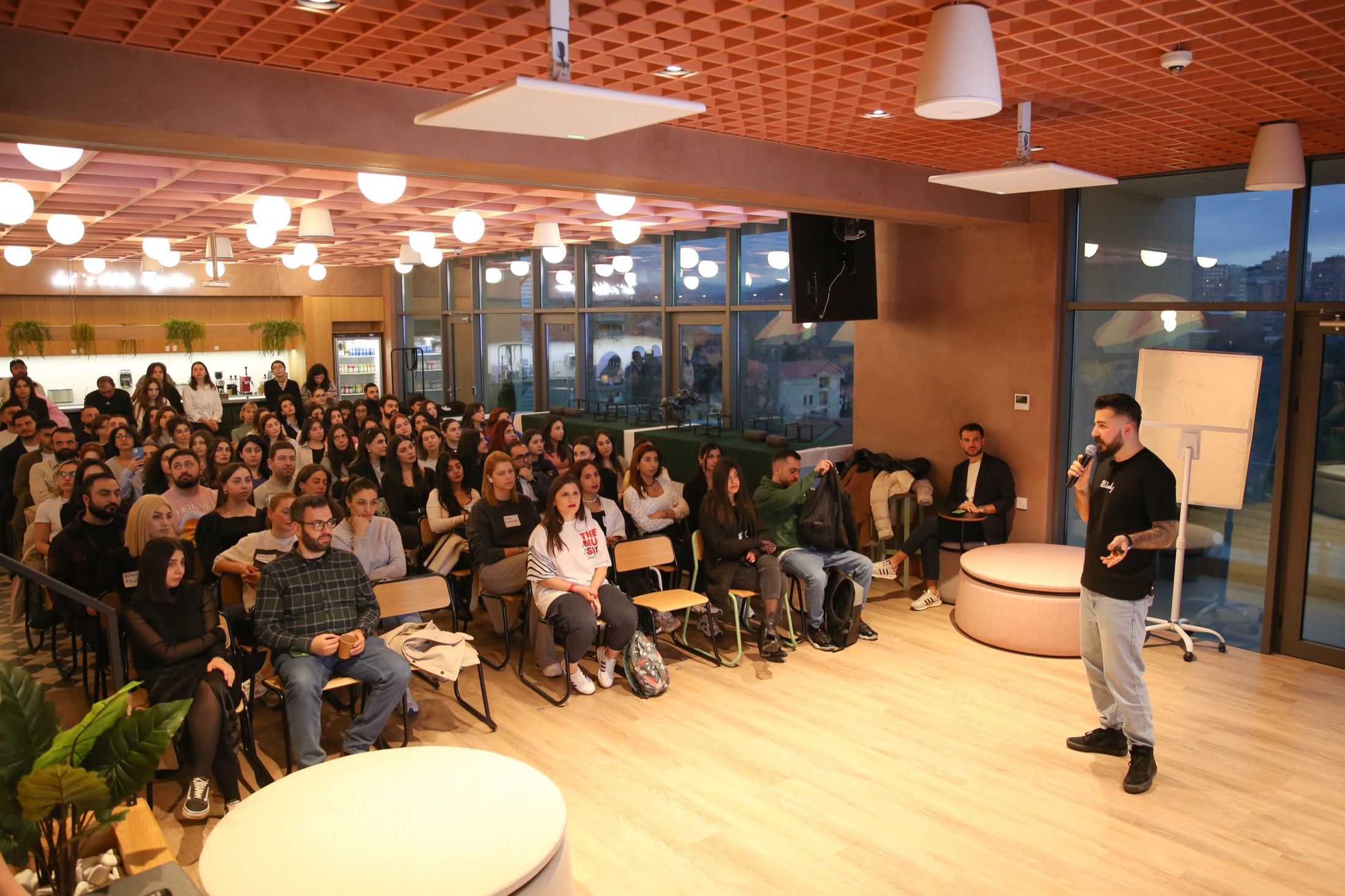
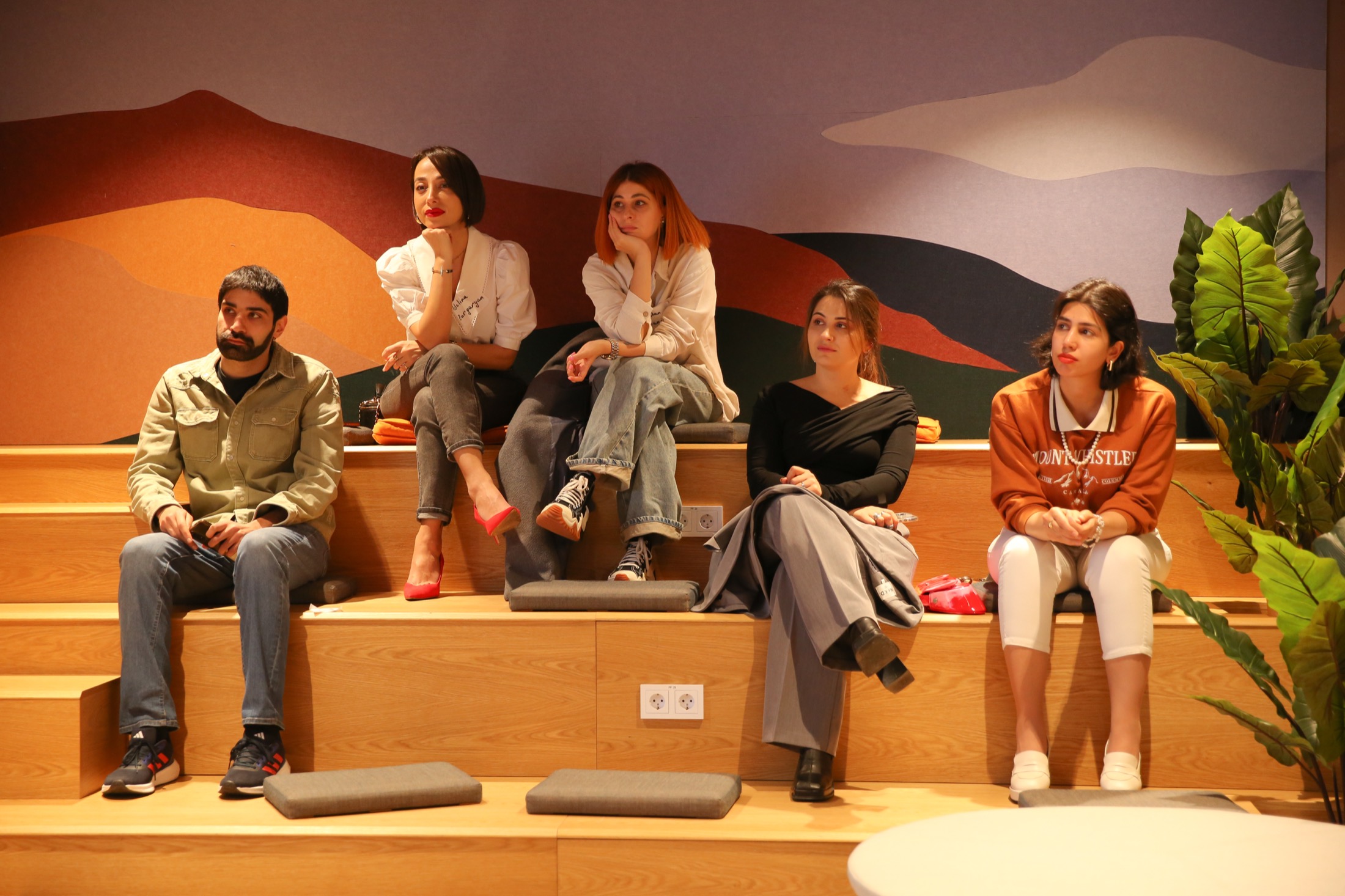
That was a decision, not a shortage of chairs. A hundred people in a hall produces energy. Forty on tiered benches produces argument. Attendees sat on cushioned wooden steps in front of a painted mountain range with the Yerevan skyline going dark through the glass behind the speaker, and nobody was more than a few metres from whoever held the microphone.
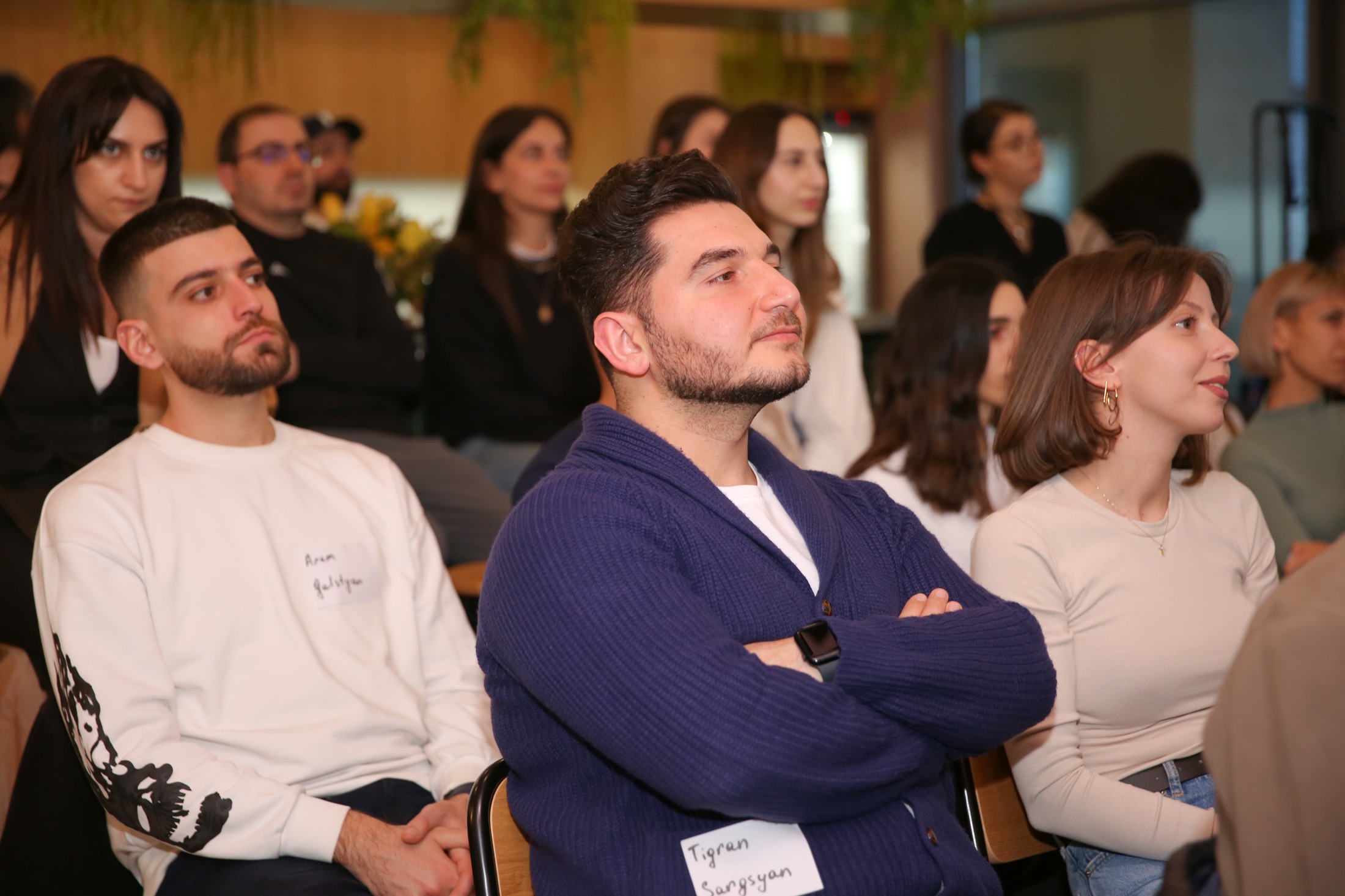
The list was drawn around a specific mix: product designers, UX/UI designers, product managers, product owners. Not a designers-only room. A product-people room, which changes what the arguments are about, because half the room has to answer for a roadmap rather than a screen.
A new paradigm and an old skill
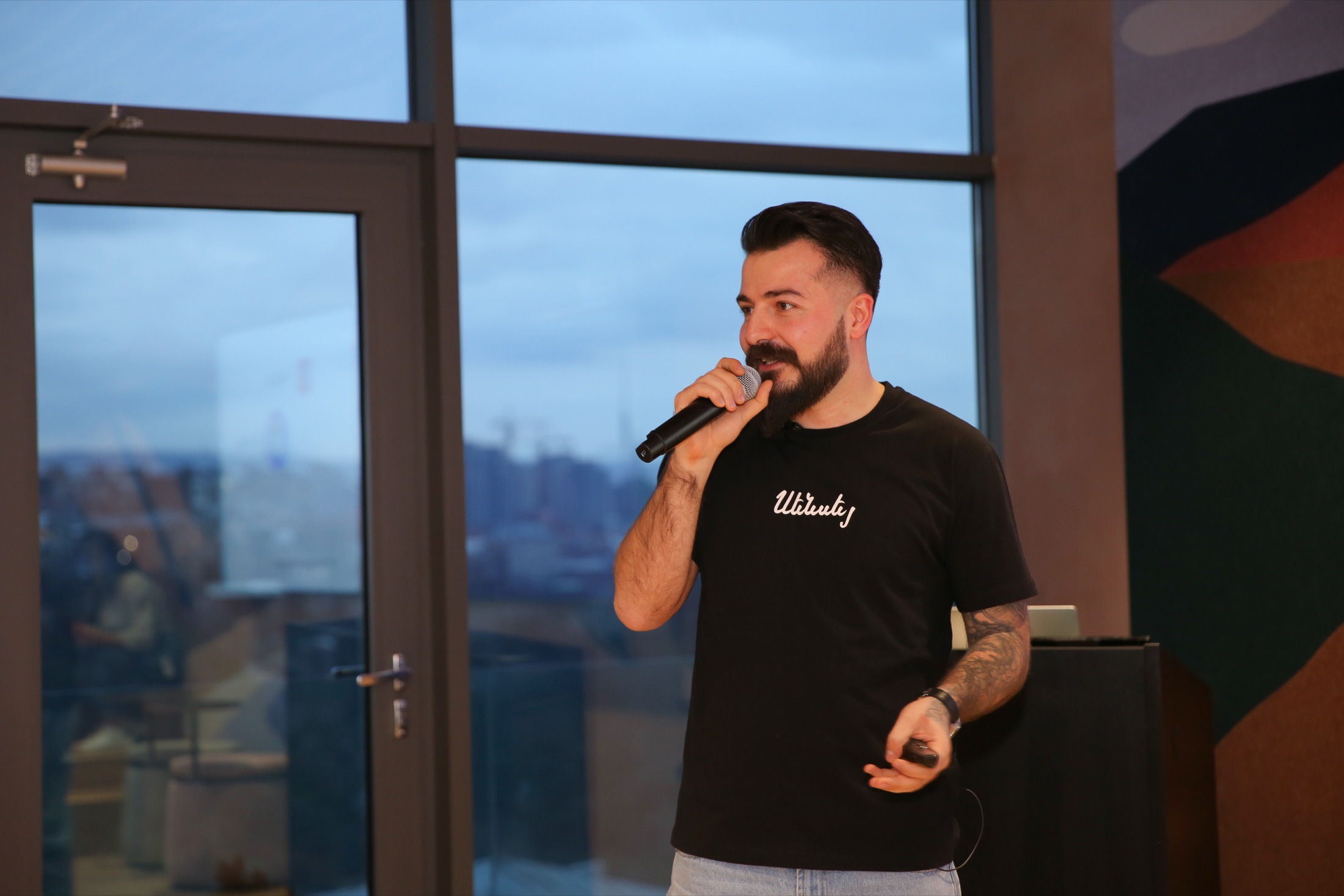
I presented UX Patterns in Generative AI: which interaction conventions are forming around systems that answer in language rather than in screens, and which of them are worth adopting rather than copying because a large product shipped them first.
Lusine Dashtoyan, Senior Product Designer at Adobe, spoke about using analogies for better storytelling. On paper the two talks sit far apart. In the room they turned out to be one problem seen twice. Generative interfaces are unfamiliar to almost everyone who opens them, and the only reliable way to make an unfamiliar system legible is to reach for a structure the person already carries in their head. One talk described the new thing. The other described the oldest tool we have for explaining a new thing to somebody else.
The programme was kept to two talks on purpose. The rest of the evening belonged to the room.
Three zones, twenty minutes each
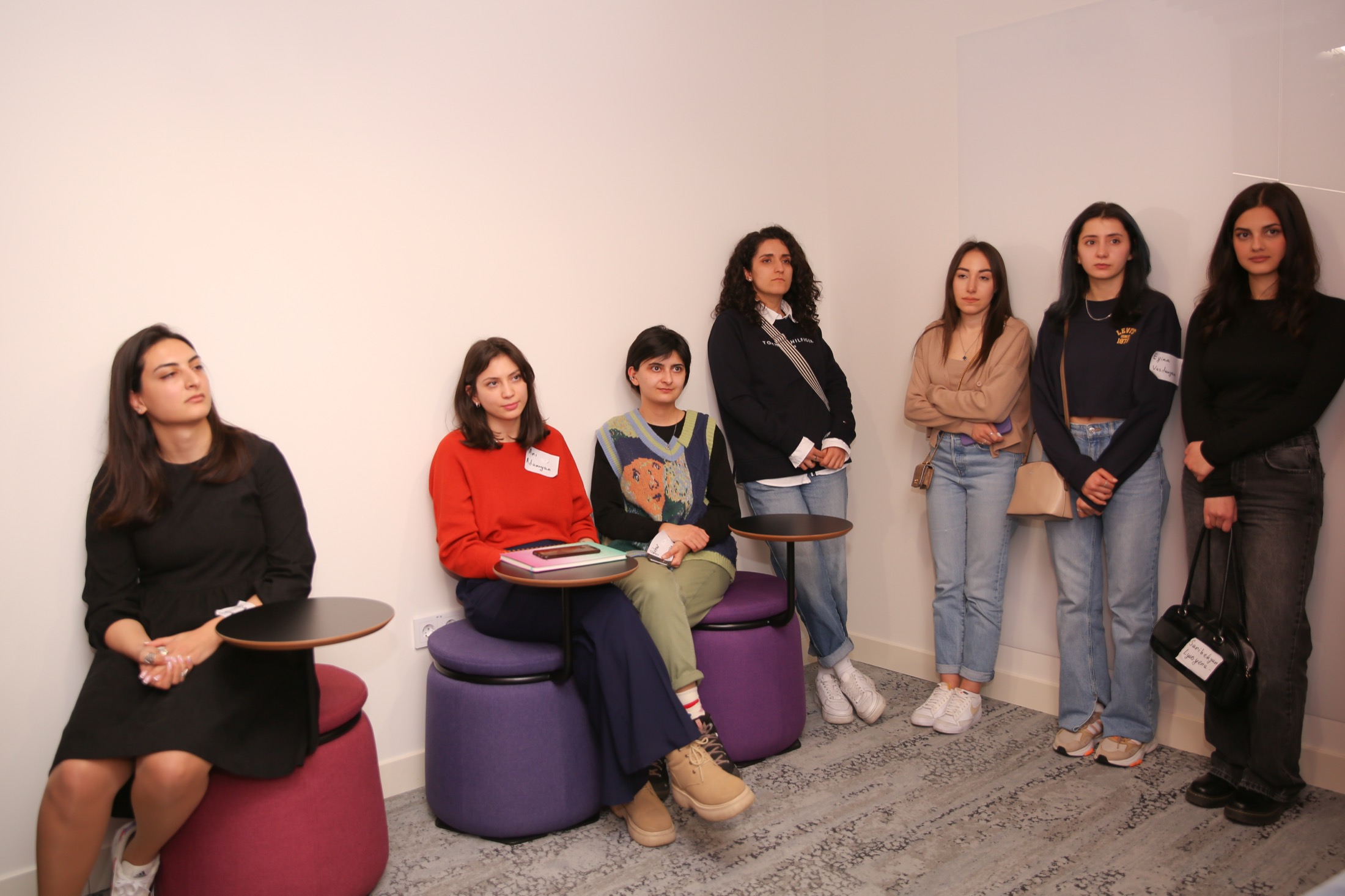
After the talks the event split into three themed discussion zones, each with a moderator from the industry, each running twenty minutes before the group moved on. Armine Tevosyan took UX sign-off, the unglamorous question of who actually approves a design and on what evidence. Hayk P., a product manager at ServiceTitan, ran the zone on how product designers and product managers work together, which is where most of the friction in a small product team actually lives. I ran the third: which parts of design work AI is likely to take, and which parts it is not.
Twenty minutes is short deliberately. There is no warm-up phase and no drift. People state a position early because there is no time to arrive at one politely, and the moderator’s job is to keep the disagreement specific.
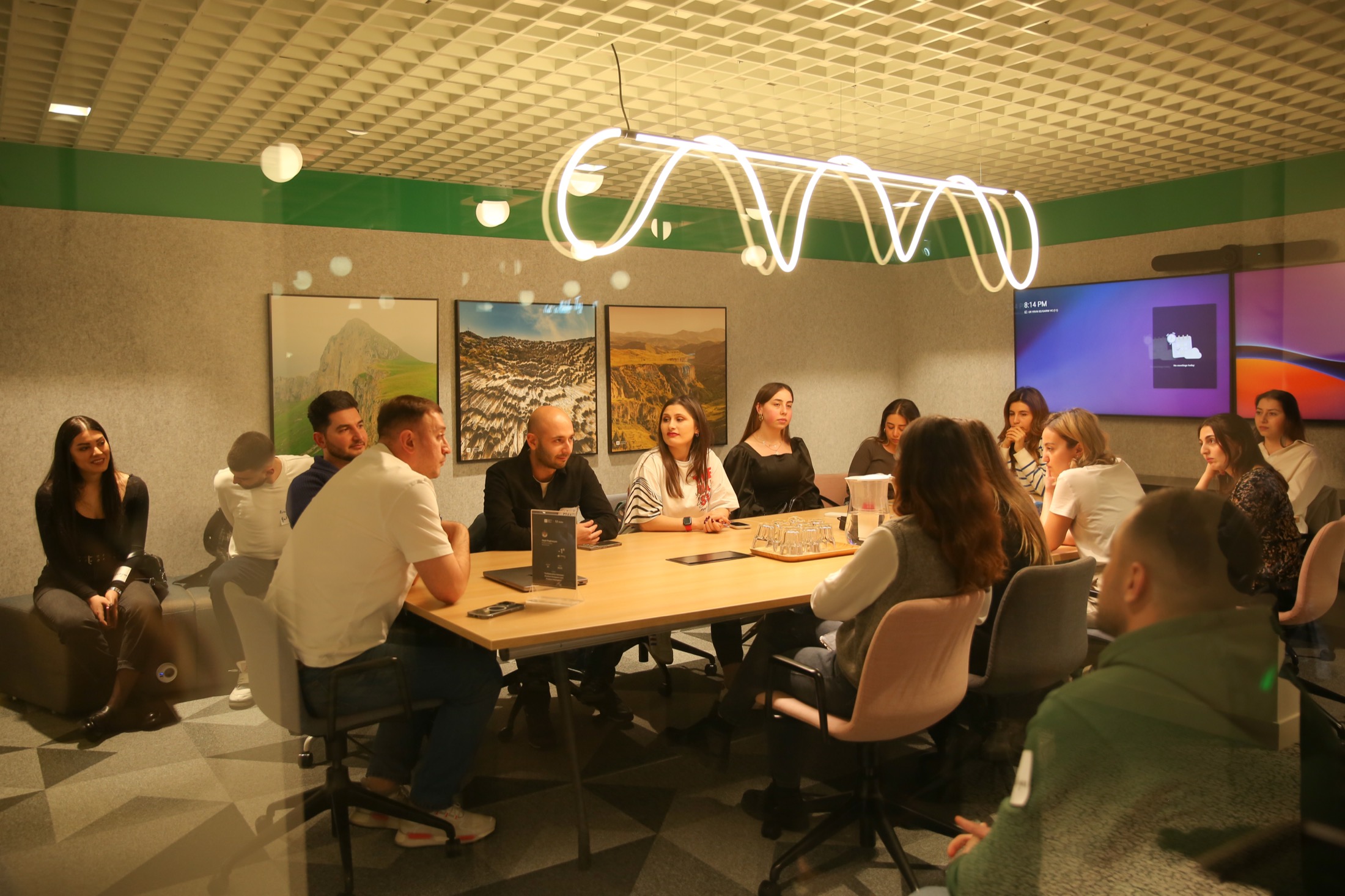
One zone ran in a side meeting room with acoustic panels, framed photographs of the Ararat plain and a basalt canyon, and a single long light-wood table. Around eighteen people were around it, seated and standing, with more on the bench along the wall. The display on the wall in that photograph reads 8:14 PM. That is the measure of whether the format worked. Not the talks. The fact that at quarter past eight, with food waiting, eighteen people were still at the table.