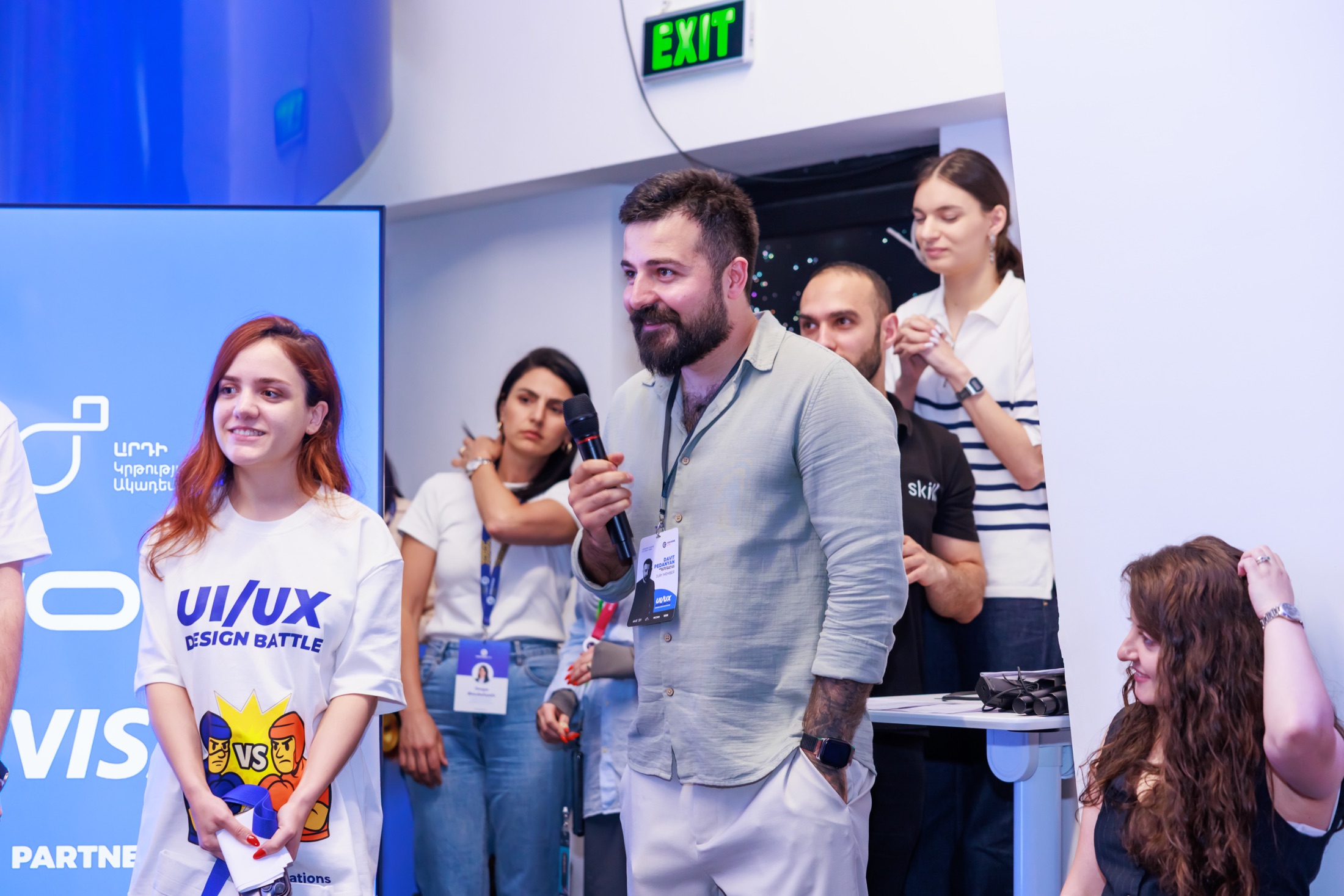
A real brief, a clock, and a room watching
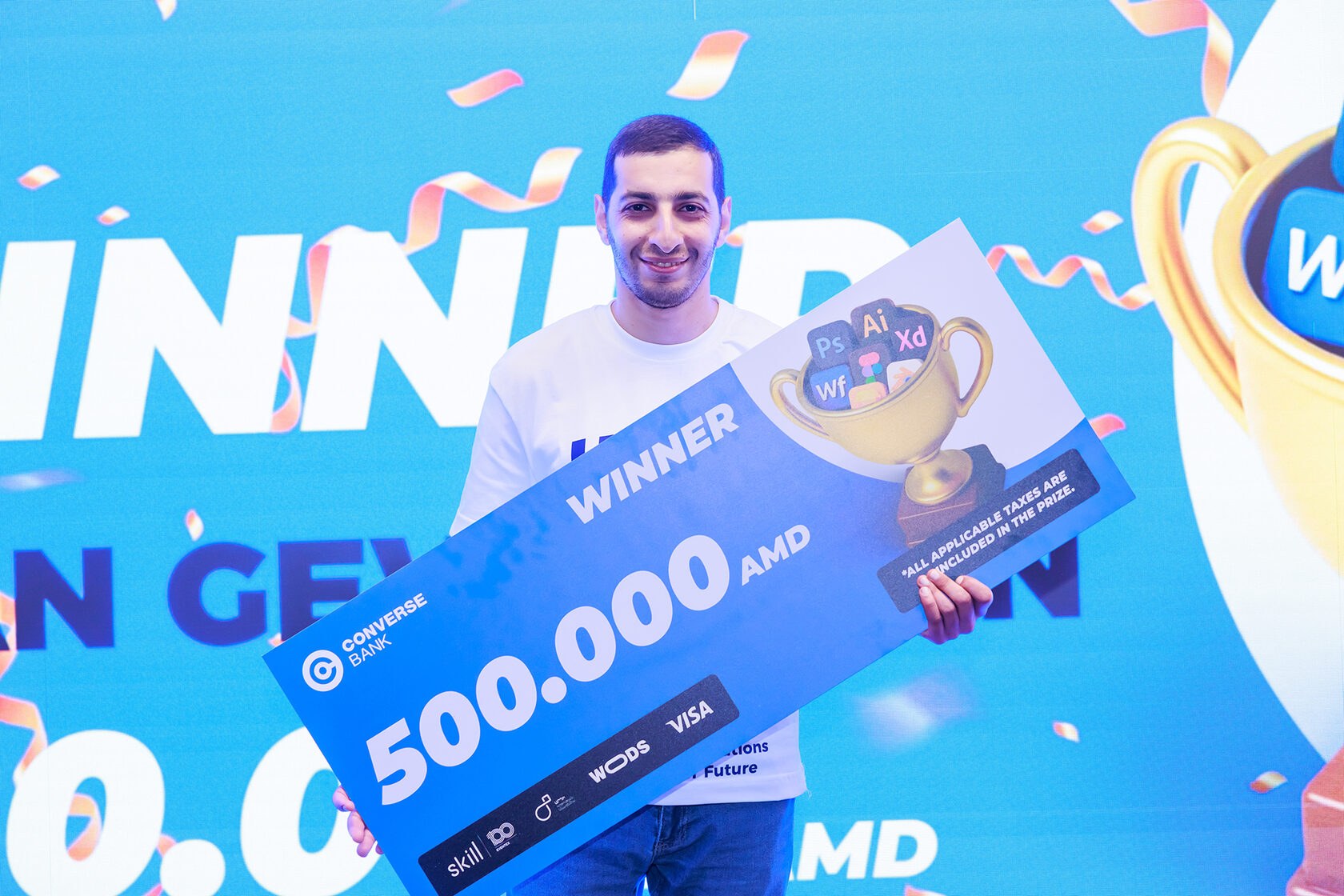
The brief was not invented for the occasion. Contestants were asked to improve the repetitive-payment templates page in the Converse Bank mobile app — a screen that already exists, that people use to pay the same bills every month, and that the bank has to live with afterwards. Converse Bank was the general partner and put up the prize: 500,000 AMD, handed over on an oversized cheque with the tax note in the small print. Skill produced the event; ARDY, UATE, WODS and Visa sat on the partner strip. My badge said JURY MEMBER.
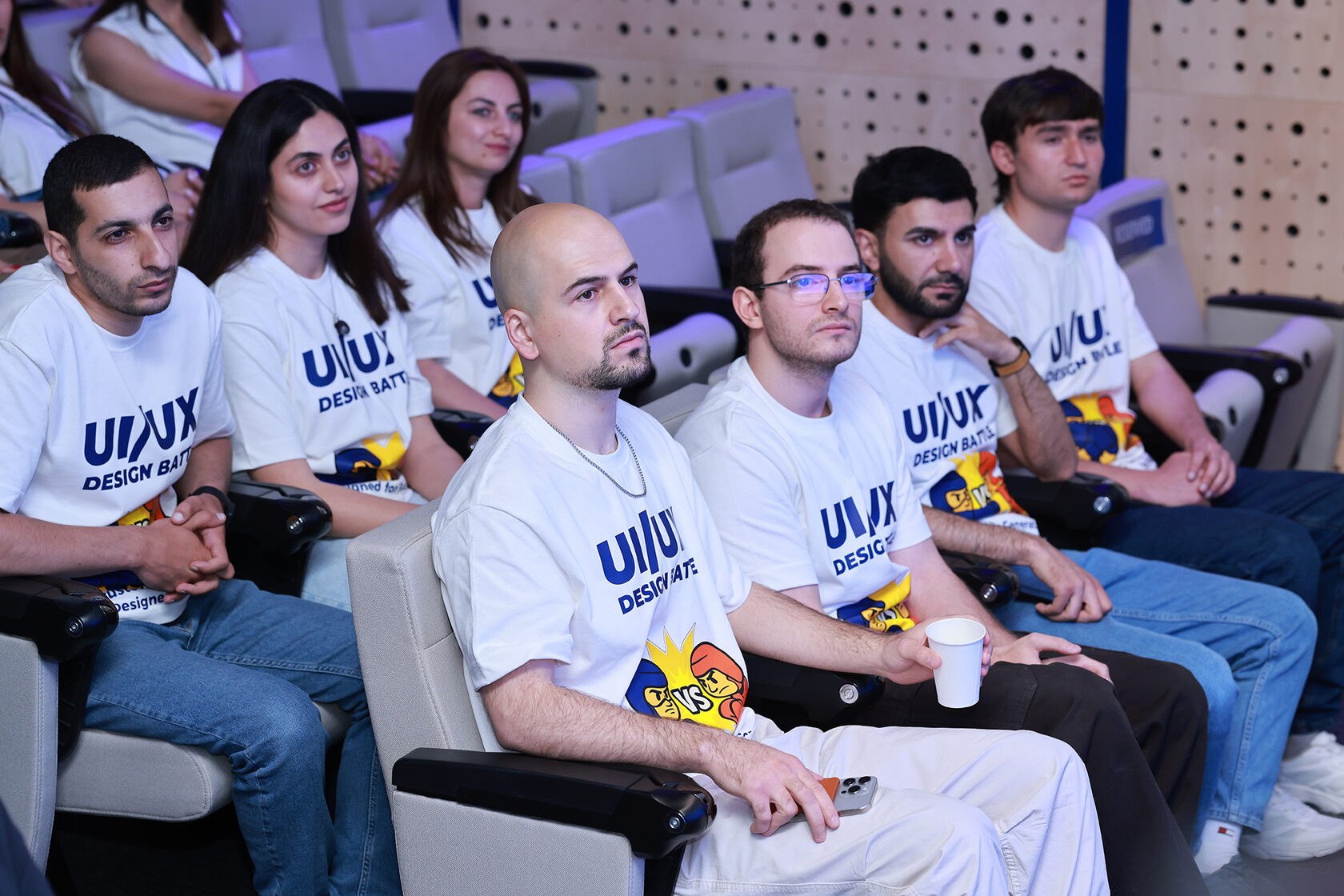
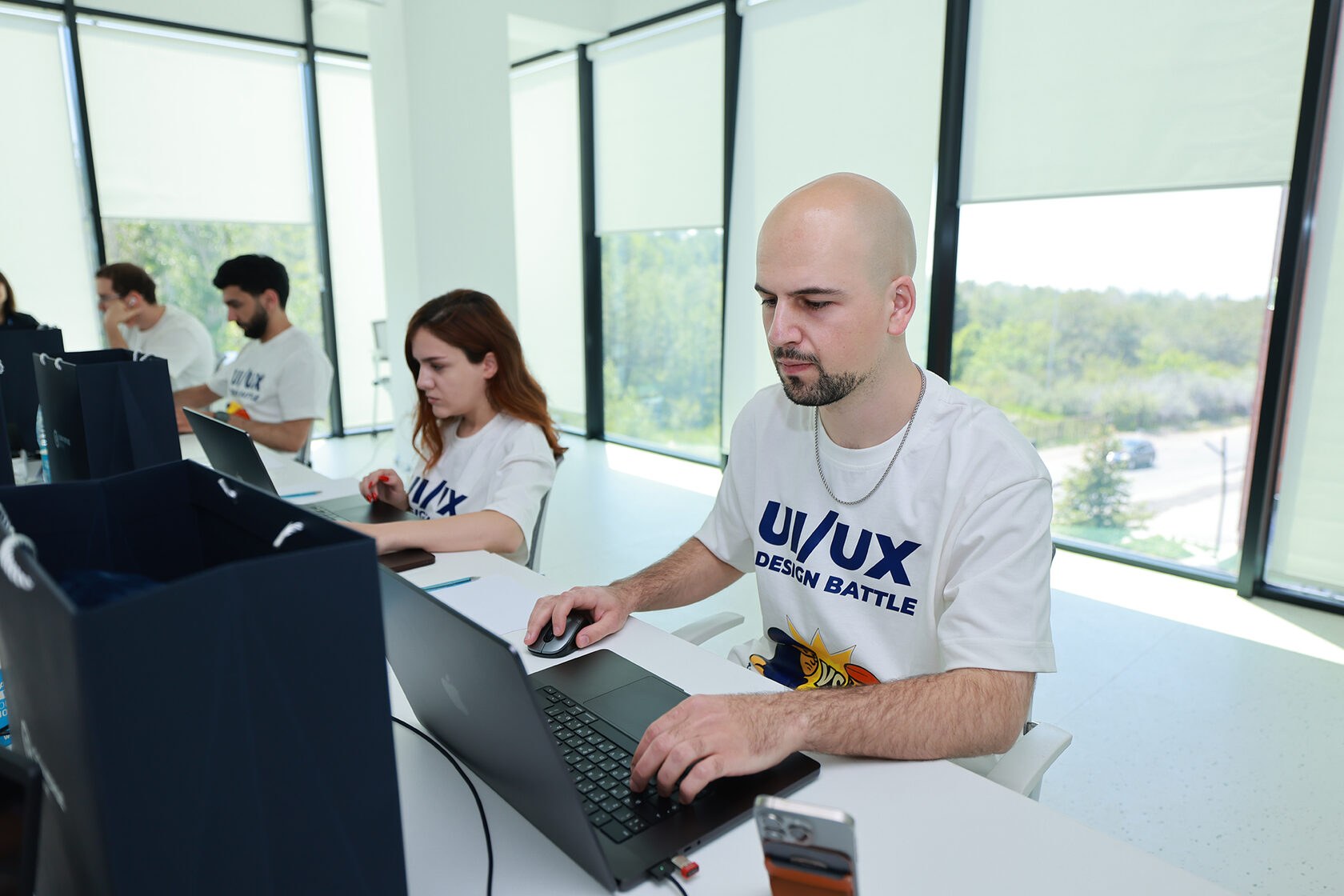
The work happened in a bright glass-walled room — long white benches, a laptop and a mouse per person, a notepad, a branded bag. Individual work, heads down. Then the same people moved into an auditorium with wood acoustic panels and grey armchairs, put on matching white t-shirts with two cartoon boxers on the chest, and watched each other present.
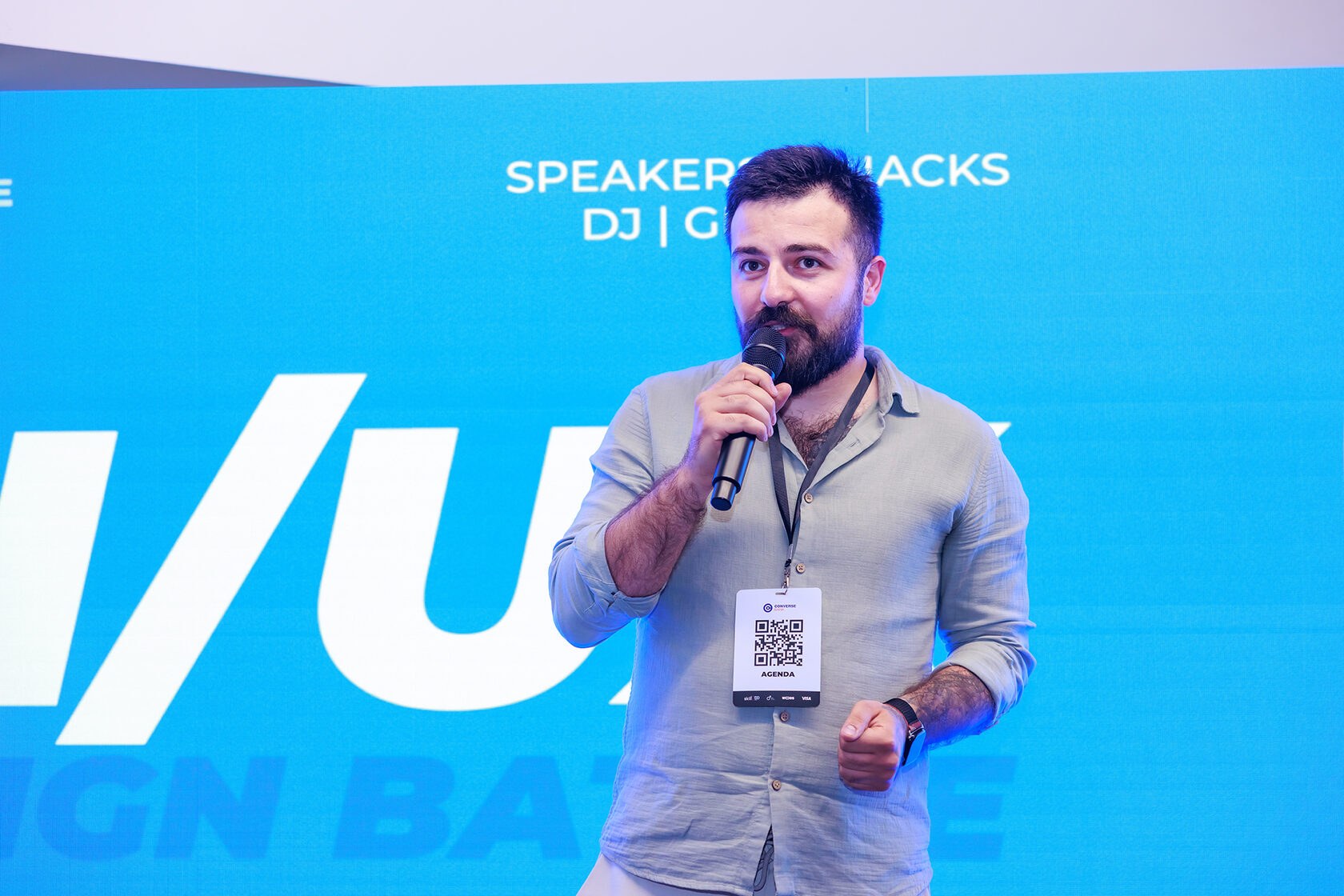
The event framing was deliberately light around the edges; the backdrop advertised speakers, snacks, a DJ and gifts. That is not a contradiction. Work of this kind goes better when the day around it is not solemn. The brief carried the weight on its own.
What I was judging
Not the best-looking screen. A competition rewards speed, and speed makes surfaces easy and thinking hard, so polish is the cheapest signal in the room. Repetitive payments make that trap especially visible: it is a page you can restyle in an afternoon and leave every real problem exactly where you found it.
The first thing I looked for was whether someone had understood the task before solving it. A payment template is a shortcut a person builds for their own future self. So the questions that decide the design are how a template gets created without a separate setup ritual, how you tell two near-identical ones apart at a glance, what happens when the amount changes, and what it costs the user to get it wrong. Anyone who reached the visual layer without touching those had redecorated.
The second was defensibility. In a timed battle you cannot iterate your way out of a bad premise, so the useful question after a presentation is always what got left out and why. A designer who can name their own trade-offs made choices; a designer who presents every decision as equally deliberate usually made none. The third was what happens under pushback. Some people defend the artefact and some defend the reasoning, and that difference tells you more about who will be useful on a product team in a year than any case study does.
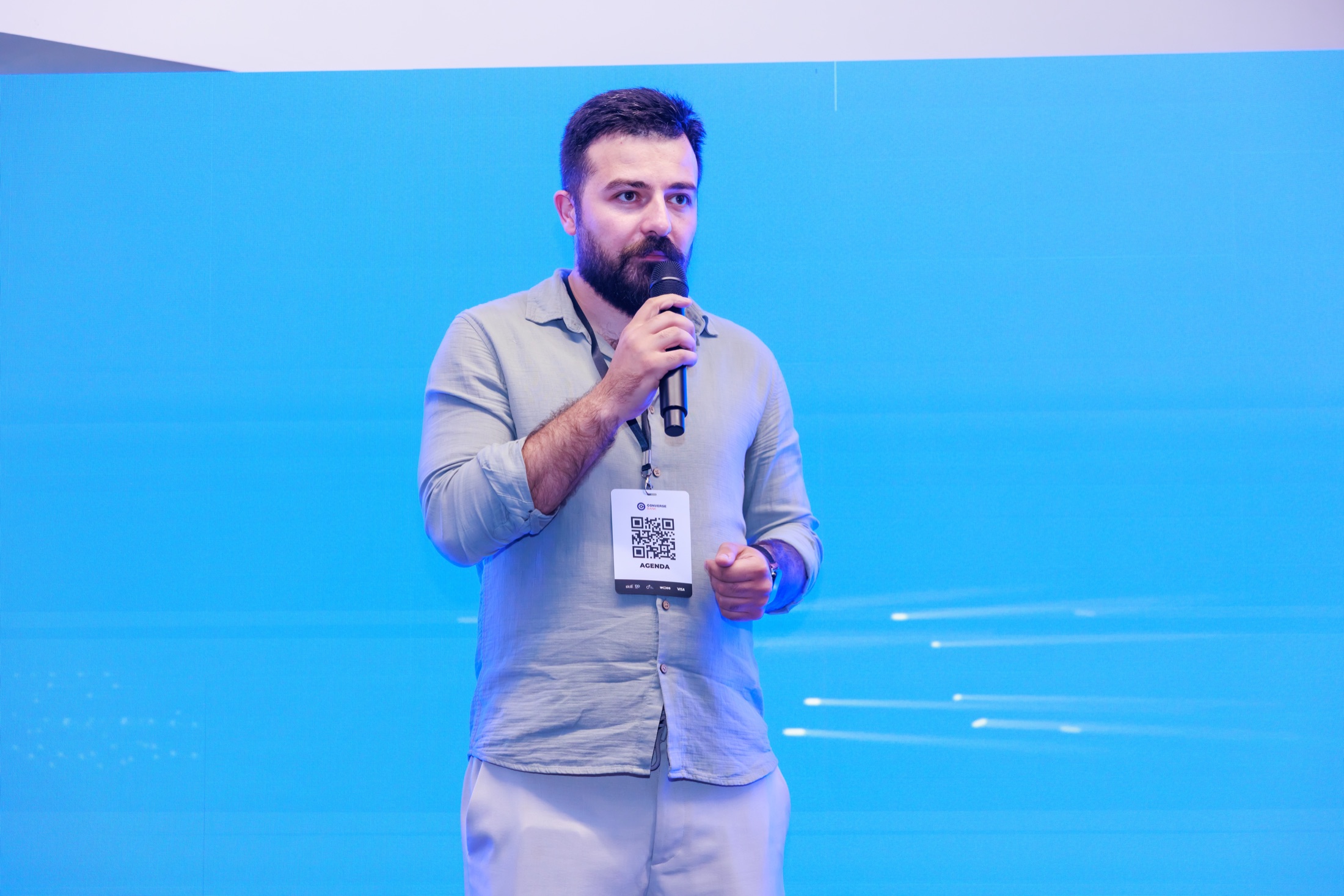
What the format is good for, and what it is not
A single sitting is not enough for research, and nobody should present the results as finished product decisions. What a battle produces is a well-argued sketch. That is worth saying plainly, including to the people who win.
What it does give is rare in this market: a real brief from a real bank, a fixed deadline, and a public defence in front of practitioners under no obligation to be encouraging. Most designers at that stage of a career have never once had to explain their work to a stranger who might disagree with it. That experience is worth more than the prize money.
It also makes the process visible to everyone in the seats. When emerging designers watch each other’s ideas taken apart and put back together with respect, the standard for what counts as a good argument rises for the whole room. That is a cheap way to raise the level of a local practice, and more companies with real products should be funding it.