

Round tables inside a tech festival
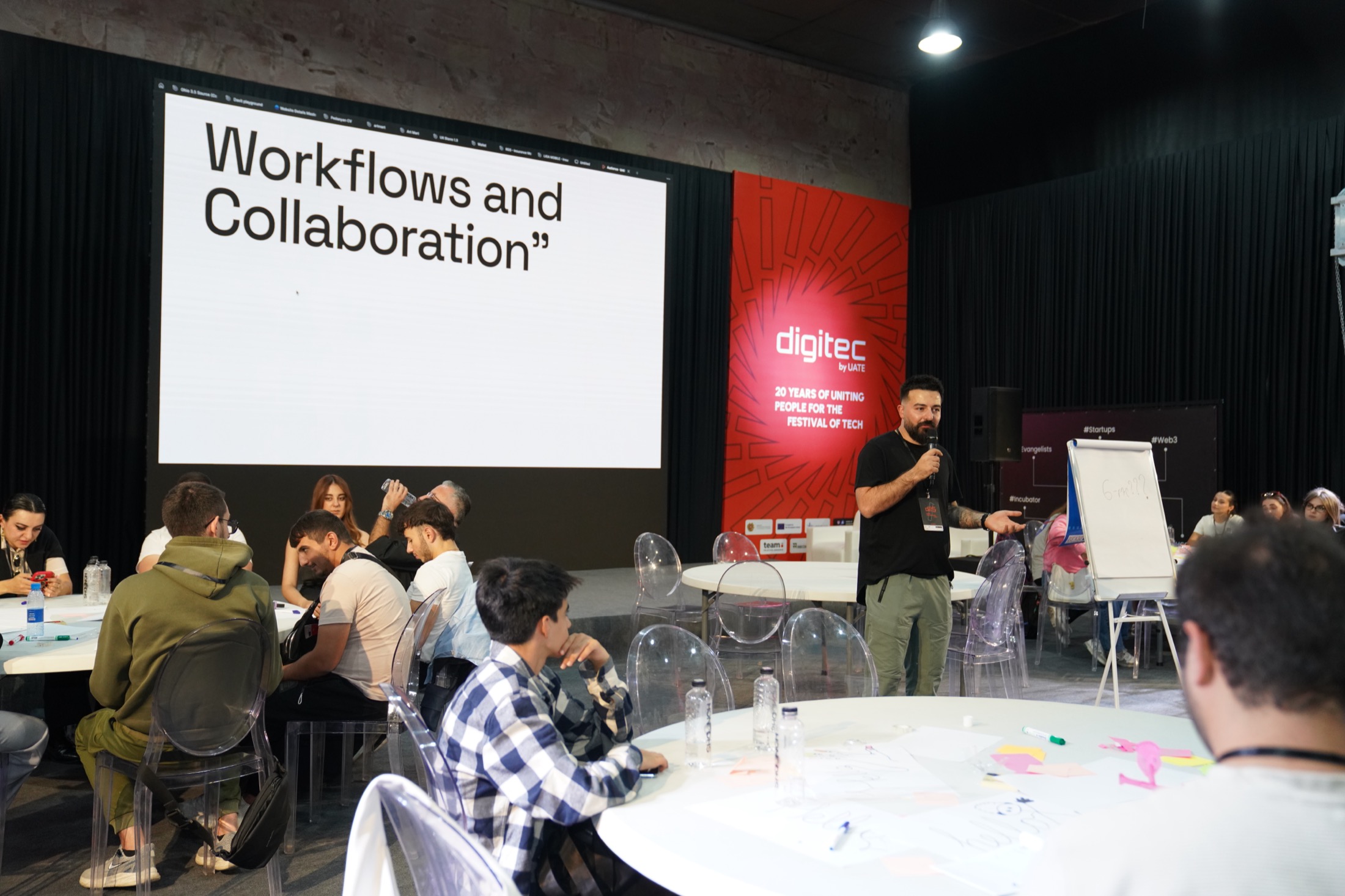
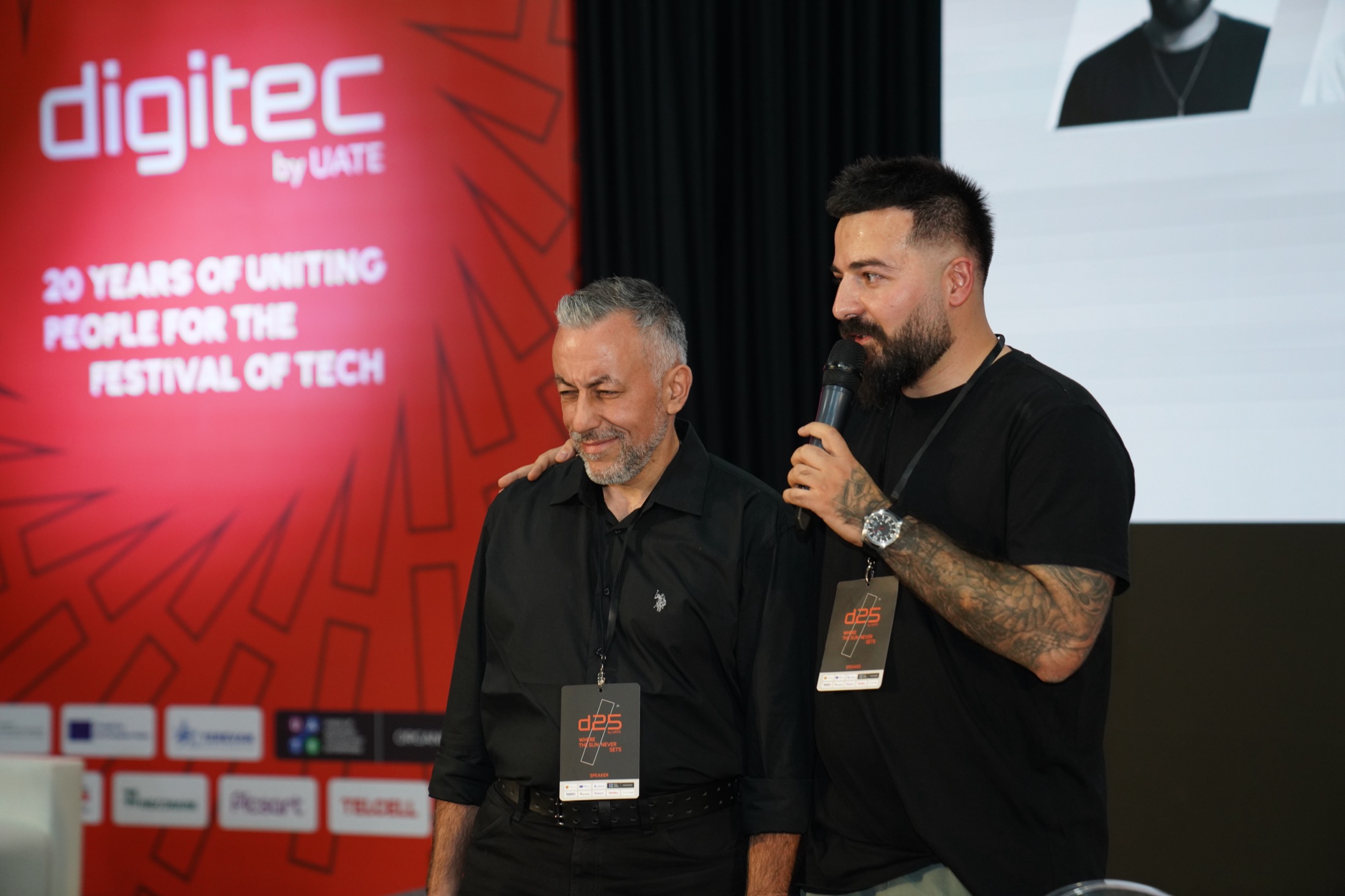
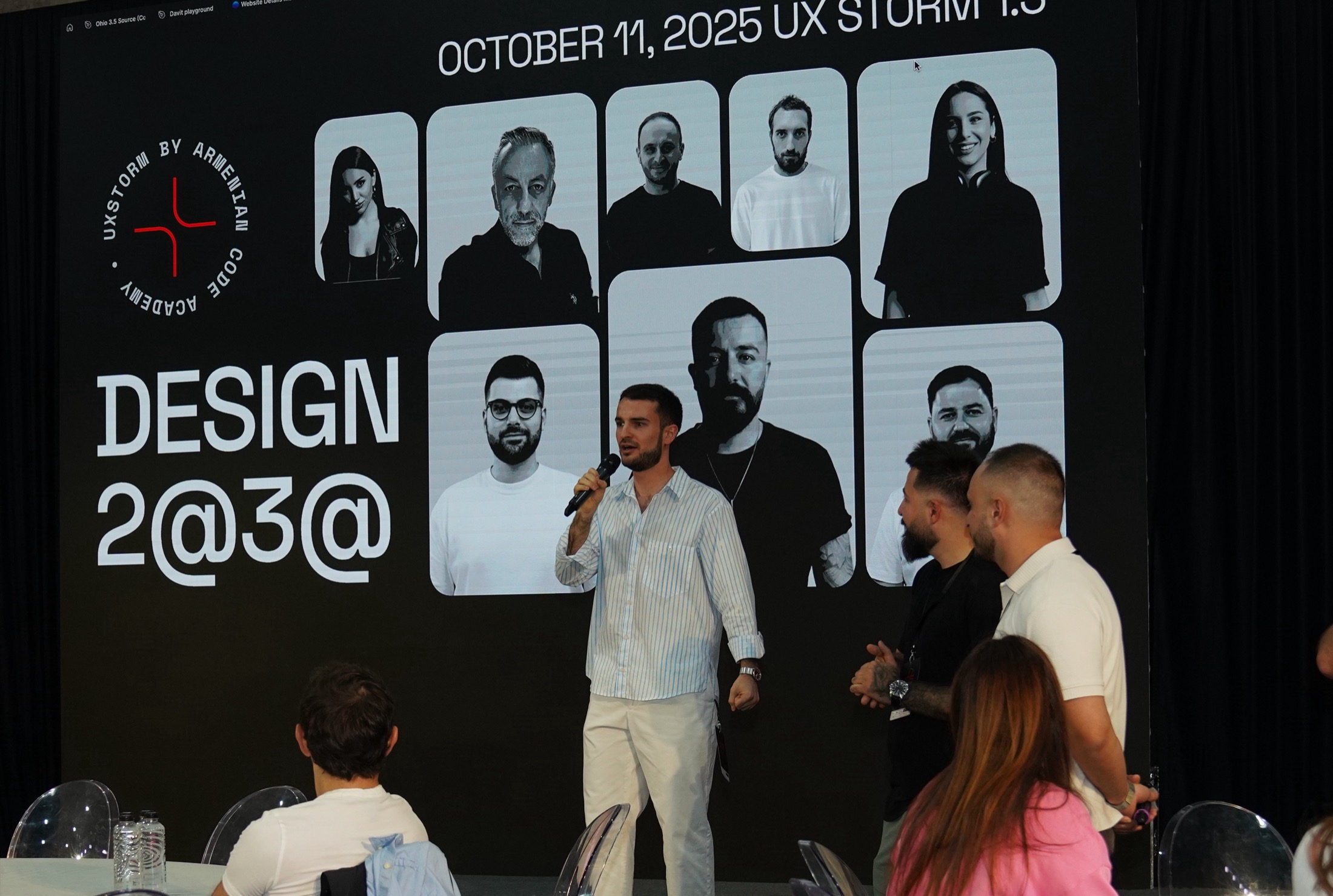
DigiTec 2025 was UATE’s twentieth edition: three days from 10 to 12 October, 15,000 square metres at the Meridian Expo & Event Centre, more than 300 participating companies, and over 40,000 visitors expected under the line “where the sun never sets.” The published spine of the festival was AI on day one, investment on day two, scaling on day three. UX Storm 1.3 took a slot inside it — 11 October, 16:00, the DigiHub hall — under its own lockup: UX Storm by Armenian Code Academy.
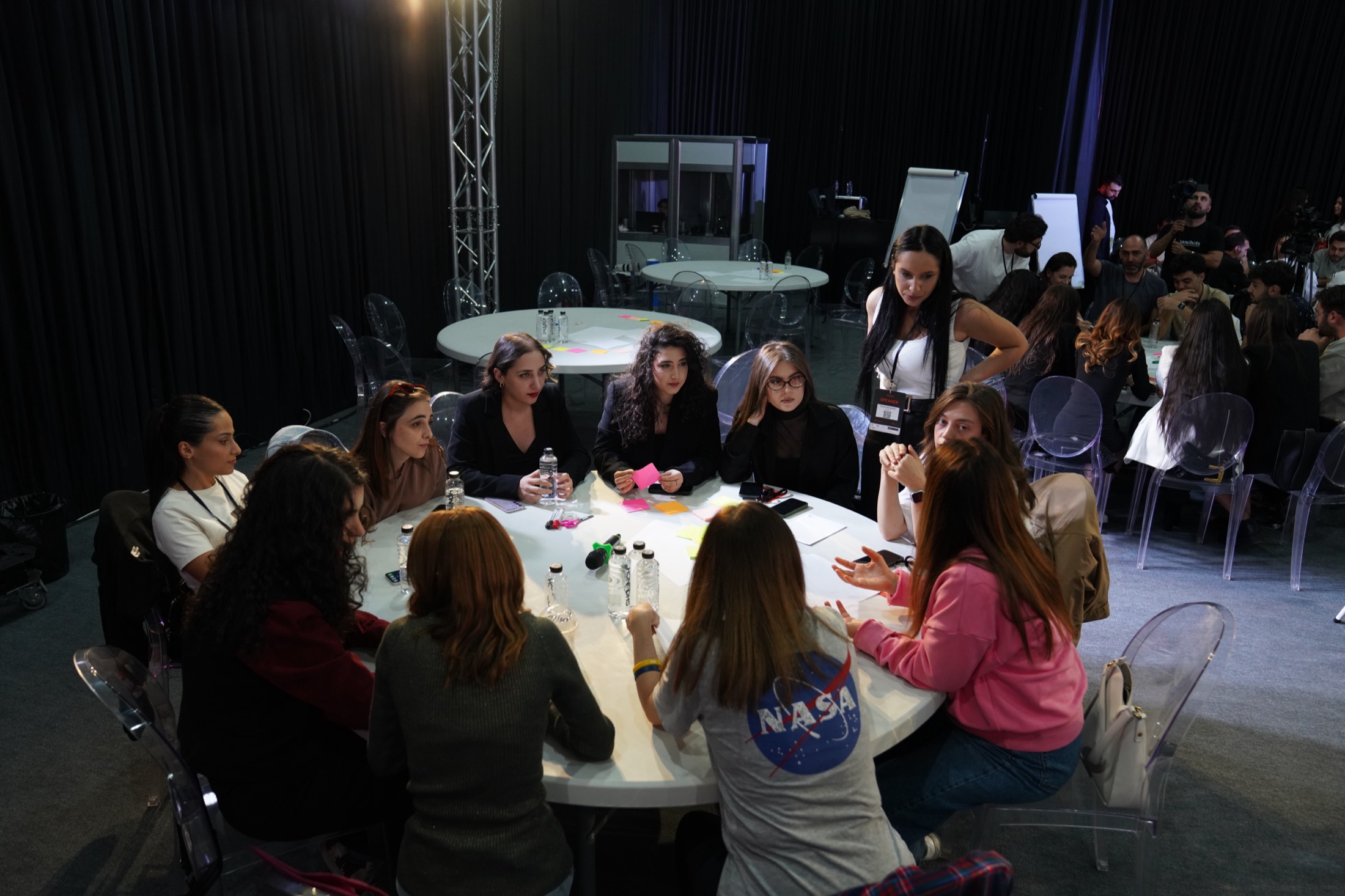
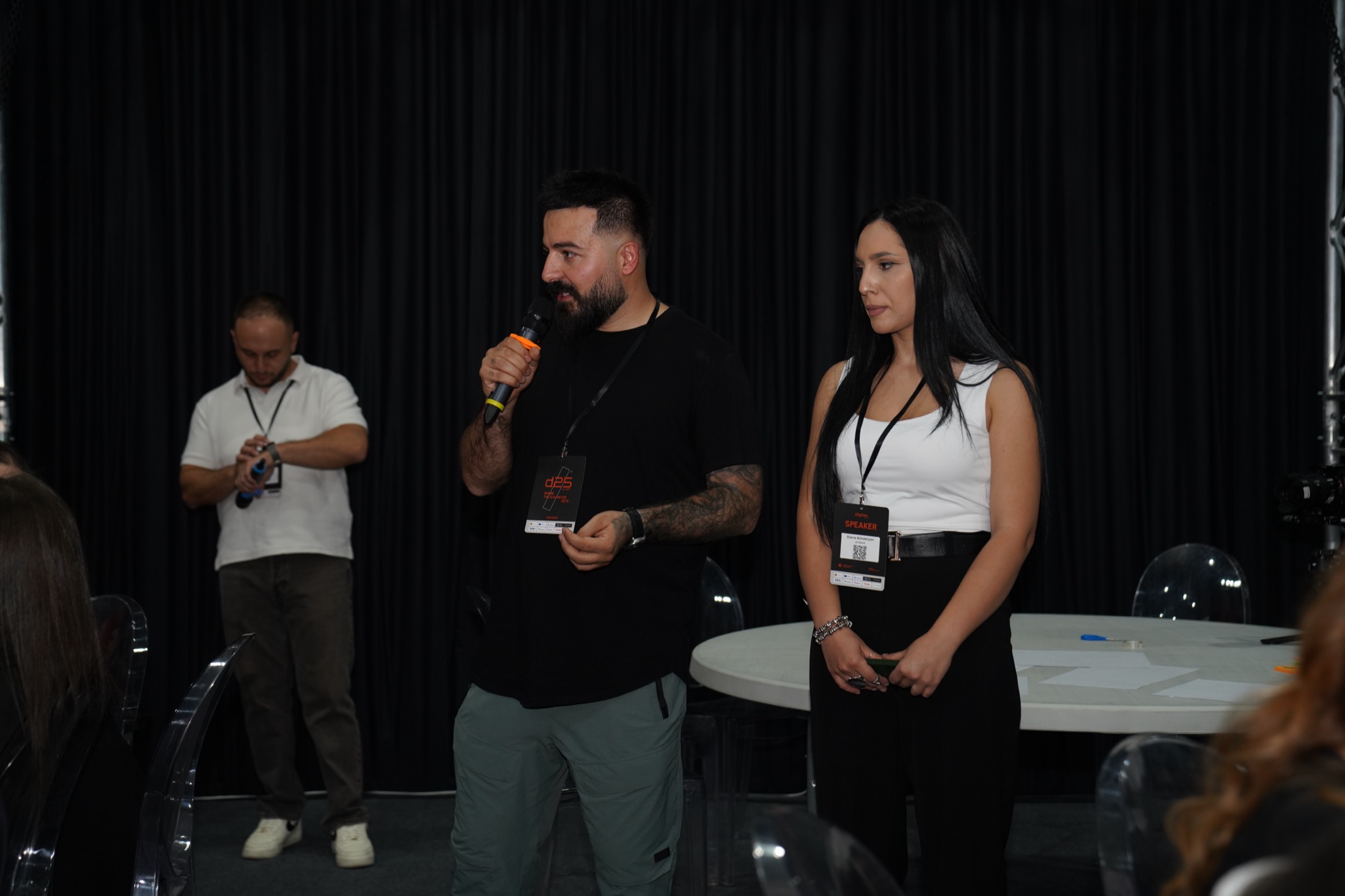
The room did the opposite of what an expo floor usually does. Black drapes, round white tables with transparent ghost chairs, eight to ten people at each, flip-chart easels, markers, and blocks of coloured sticky notes. Rows let people watch. Tables make them produce something and put a name on it. I worked the floor with a handheld mic instead of standing behind a podium, because a workshop where the facilitator stays on stage is a lecture with better furniture.
The poster had promised 100-plus designers, thinkers and practitioners, and that mixture was the point — product people, engineers, students and marketers who all end up living with design decisions someone else made. One projected topic card read simply: Workflows and Collaboration. Everything else in the room, the tables produced themselves, on paper.
What the tables actually wrote
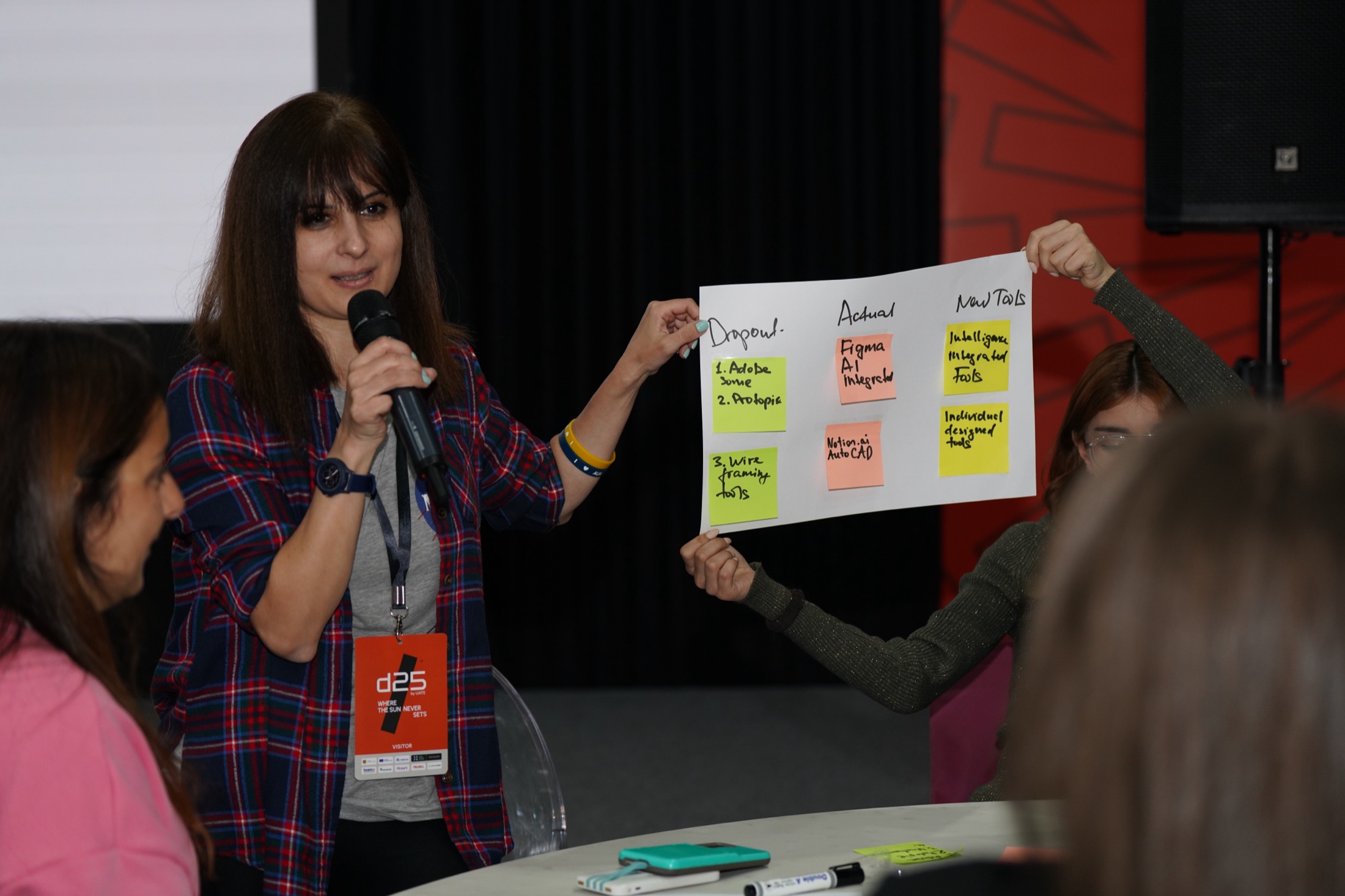
The most useful artefact of the afternoon was a sheet with three hand-drawn columns: Dropout, Actual, New Tools. What falls away by 2030, what survives, what replaces it. A participant held it up and presented it to the room.
Under Dropout the table had written the Adobe suite, Protopie, and wireframing tools. Under Actual: Figma with AI integrated, Notion.ai, AutoCAD. Under New Tools: “intelligence integrated tools” and — the interesting one — “individual designed tools.” Read that last phrase again. A table of working designers, given the length of one exercise, bet that the industry-standard suites go first, that today’s tools survive only in the versions that absorb AI, and that the end state is practitioners assembling their own instruments rather than renting somebody else’s. That is a sharper claim than anything on a trends slide, and nobody led them to it.
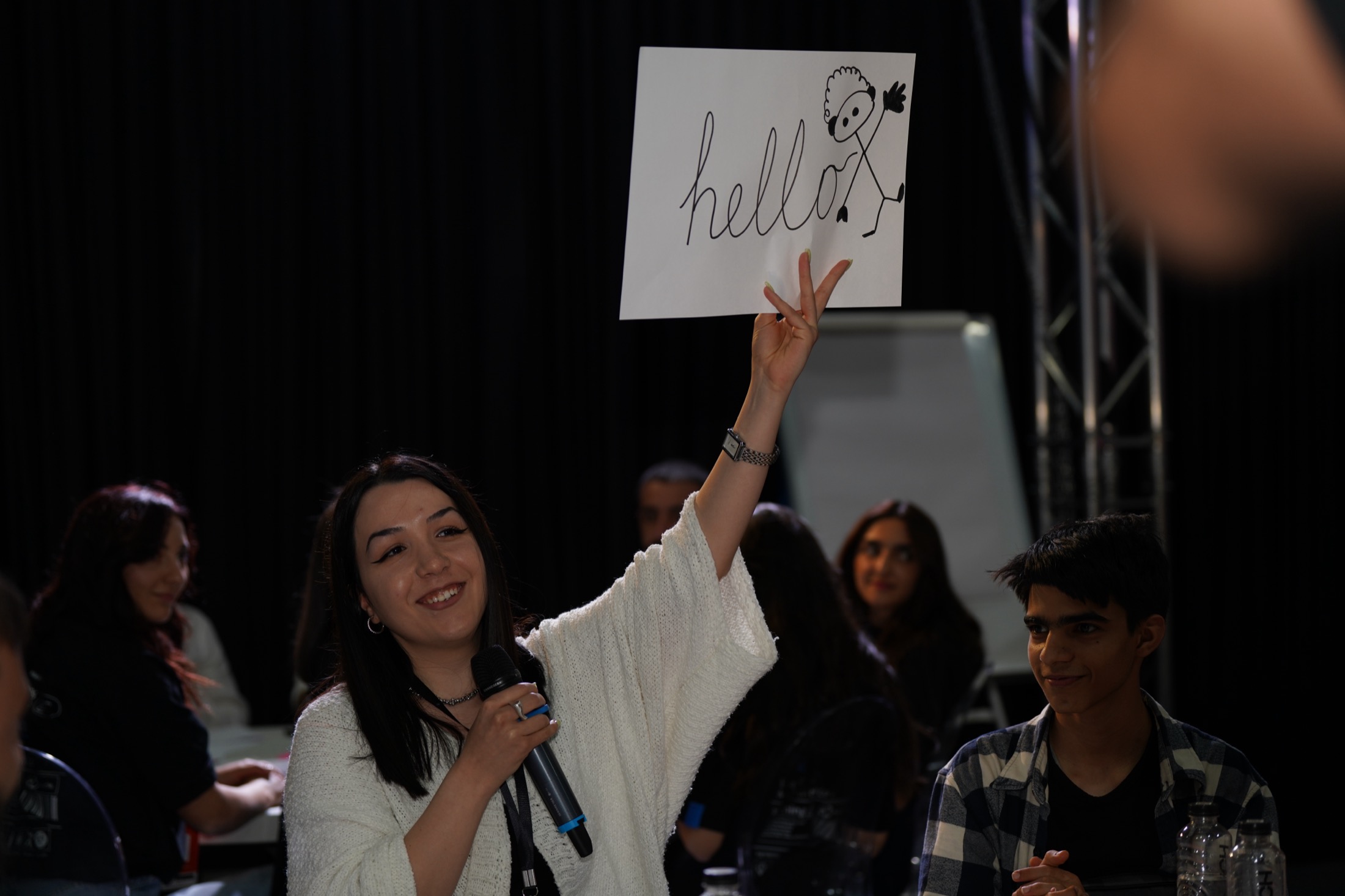
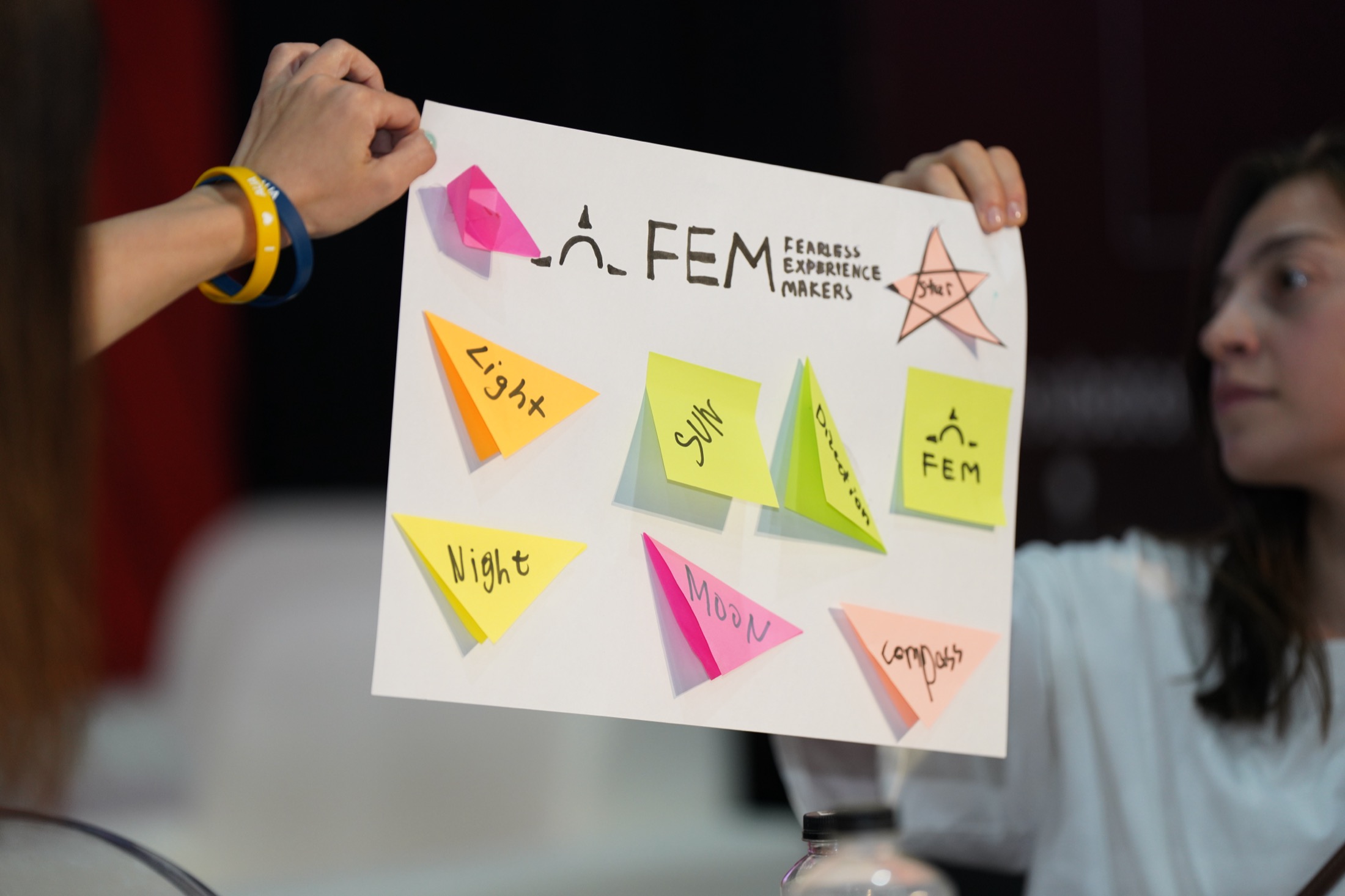
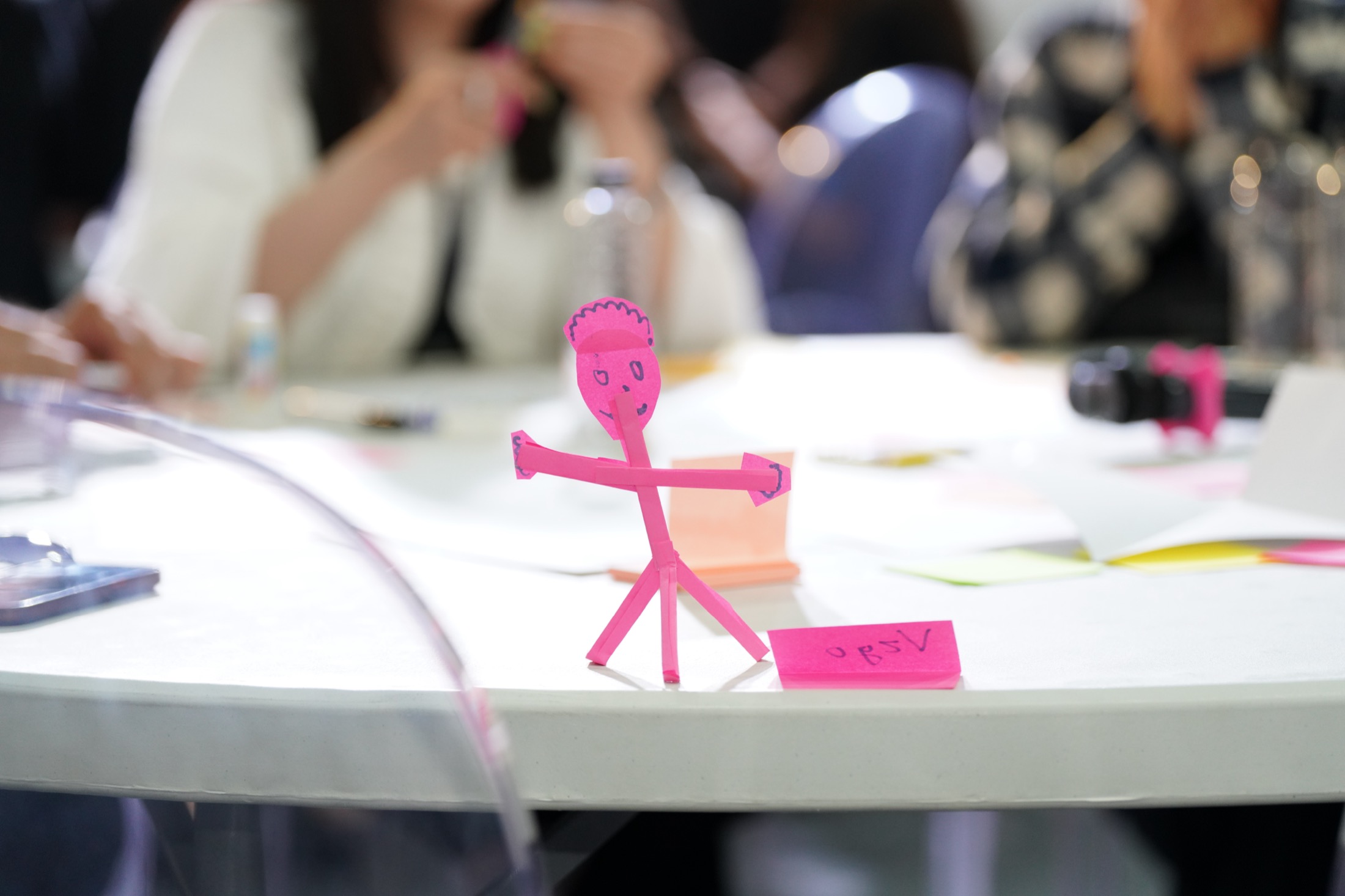
Another table went sideways from tools to identity. Their poster was headed FEM — Fearless Experience Makers, with a hand-drawn face mark and folded paper triangles labelled Light, Night, Sun, Moon, Direction, Compass, Star. A third produced a “hello” wordmark with a stick figure waving out of the final letter. Pink paper people, cut and folded, stood upright on the tables. Scissors and sticky notes, and what came back was positioning, symbol and tone — precisely the layer that does not automate.
Why a working room, and why here
The materials were a constraint with a purpose. Give a designer a laptop and the conversation drifts to execution within five minutes, because execution is where the tools flatter us. Give the same person a marker and a folded sticky note and the only things left to be good at are the idea and how well it survives being explained to eight strangers.
The prompts worked the same way. Asking what design will be in 2030 invites a trend report. Asking which of your tools is gone, which survives and what replaces it forces a position you can be wrong about. Nobody left with a consensus forecast — the tables did not agree with each other and did not need to. They left with their own handwriting on a sheet of paper, which is the only kind of prediction people act on.
The reason to run this at DigiTec rather than at a design meetup is that the design conversation is not very useful when only designers hear it. A festival that gives three days to building, funding and scaling benefits from one room asking what should be built and who carries the cost when the answer is wrong. A talk would have made that point as an assertion. A workshop made it structurally: design’s contribution is not a presentation at the end, it is a way of working that other disciplines can sit inside for an afternoon.