SaaS / 2021
Material Exchange
Digital Asset Management Platform and Marketplace
- Tools


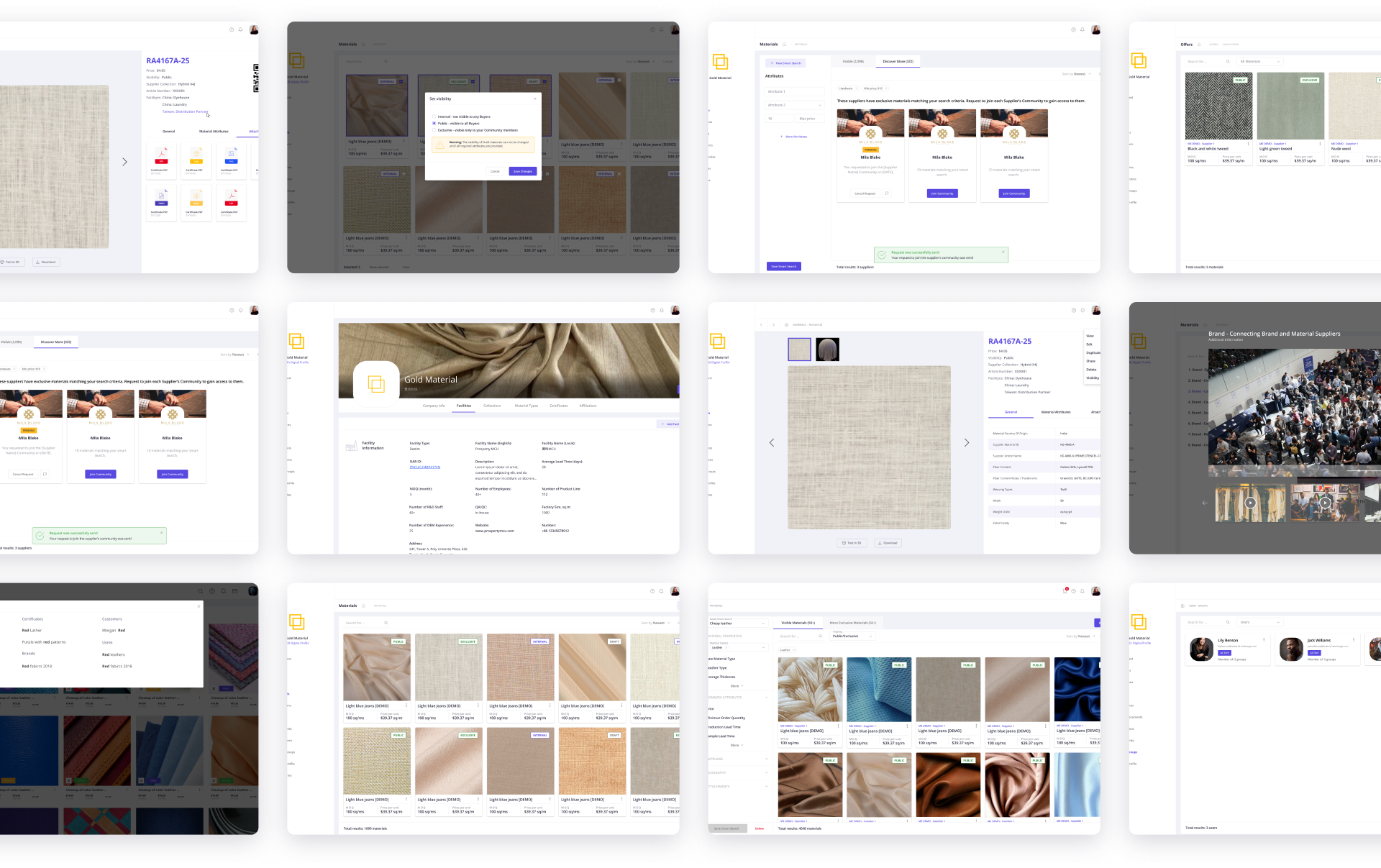
Material Exchange is a digital platform that facilitates the efficient and streamlined exchange of material information between brands, manufacturers, and suppliers in the fashion and footwear industry.

Discovery Phase
Problem N1
Imagine Nike's material manager journeying to Vietnam, seeking sustainable materials to be used as a small piece for Air Jordans. Collaborating with local suppliers, they assess quality, recycling, and sustainability, incurring costs of $15,000 for travel and $10,000 for testing. This risk underscores Nike's commitment to responsible sourcing, with only 15% of findings proving useful.
Companies like Nike spend millions on such research, but just a fraction proves valuable. So, material digitalization is needed for cost savings. The potential to revolutionize sourcing and sustainability drives ongoing innovation.

Fashion is responsible for 10% of human-caused greenhouse gas emissions and 20% of global wastewater,
and uses more energy than the aviation and shipping sectors combined.
Global fashion also consumes 93 billion metric tons of clean water each year, about half of what Americans drink annually.
- Since the 2000s, fashion production has doubled and it will likely triple by 2050, according to the American Chemical Society.
- 92 million tonnes of unwanted fabrics are disposed of each year.
- 14.5 million tons of textiles were landfilled and incinerated in 2018.
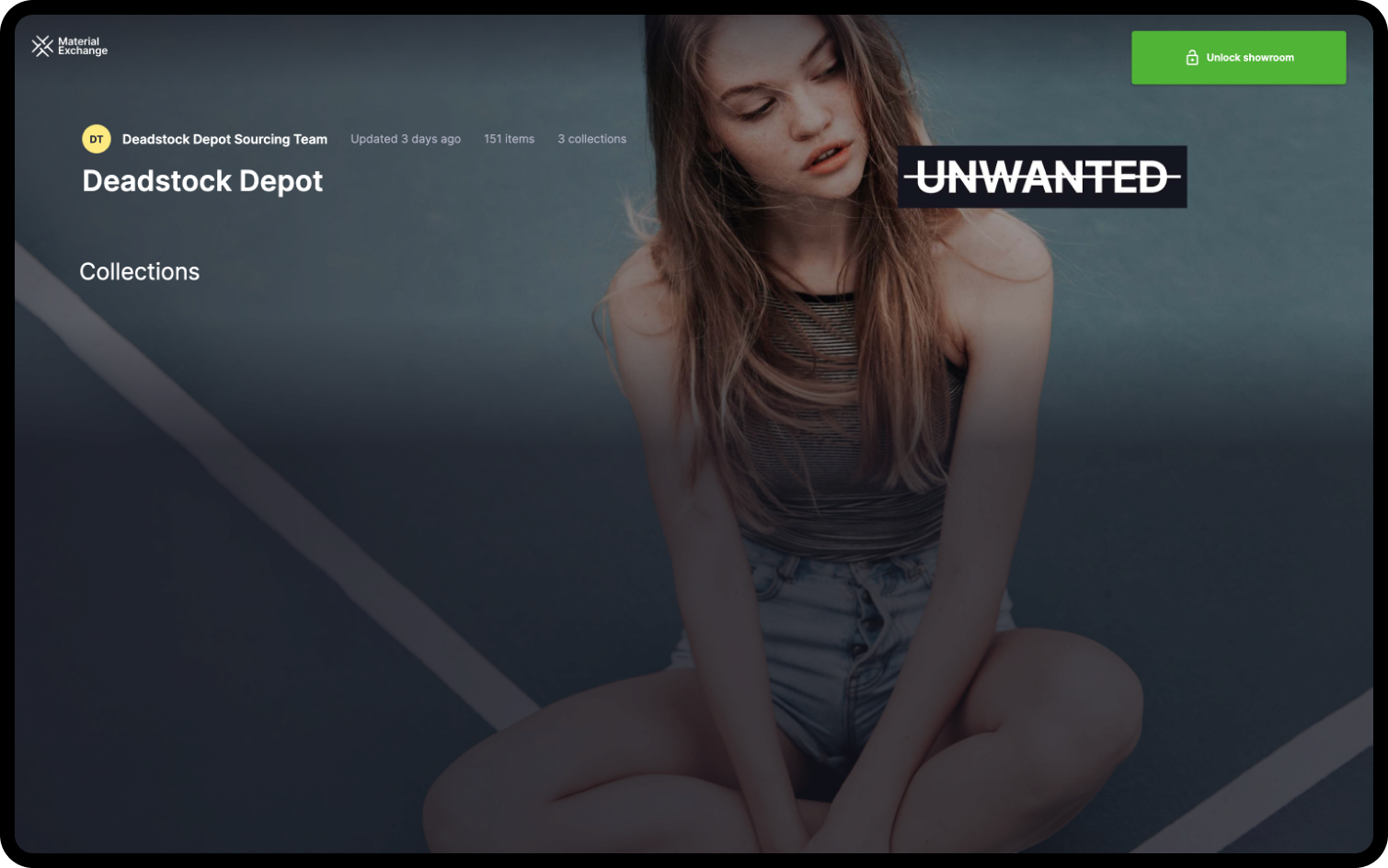
Leftover fabrics have already been produced, so there is no expenditure of water, energy, or virgin raw materials to create something new. With Material Exchange, they become globally available for brands to use in upcoming collections.
User Research
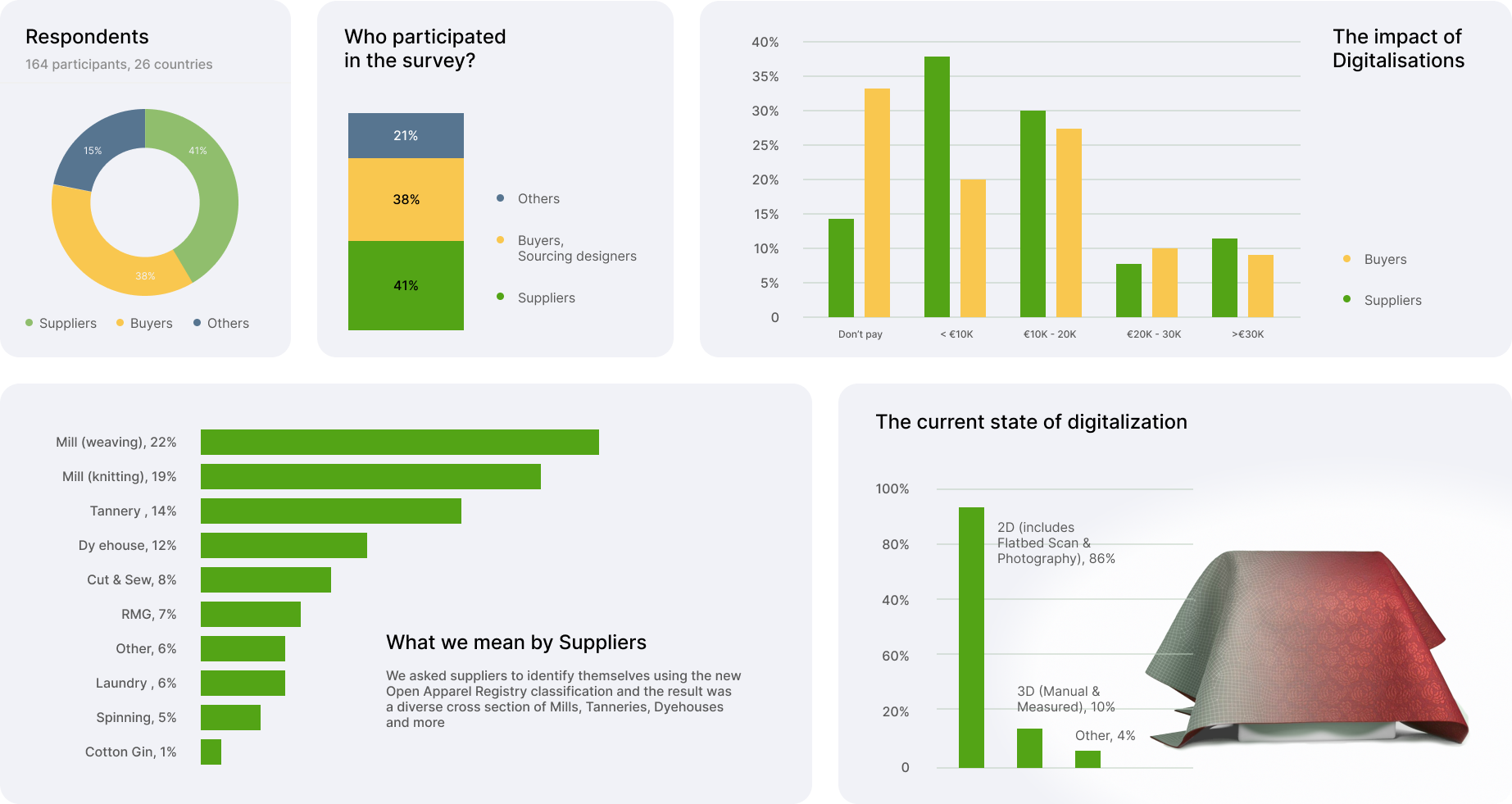
To ensure a user-centered approach to my decisions, I conducted a comprehensive survey to validate my assumptions about Material Exchange. With an impressive participation of 160 individuals from 24 different countries, I gained valuable insights into the needs and preferences of my user base. Analyzing the survey data allowed me to confirm my assumptions, identify common trends, and prioritize improvements based on user feedback.
Iterative research
I made it a practice to run user interviews and testing sessions at least twice a month. This involved both new users and people I stayed connected with over time. Custom recruitment proved more useful than panel platforms, whose participants often introduced strong bias.
Personas that evolved
Company strategy, interviews, quantitative surveys, and competitive analysis shaped my first hypothetical personas. They remained working hypotheses and evolved as new user archetypes appeared.
Platform users
Combining insights from various sources—company strategy, user research, quantitative surveys, and competitive analyses—I crafted the initial hypothetical personas. This marked the beginning of an ongoing process of discovering new user archetypes throughout the journey.

Building the Visual Language
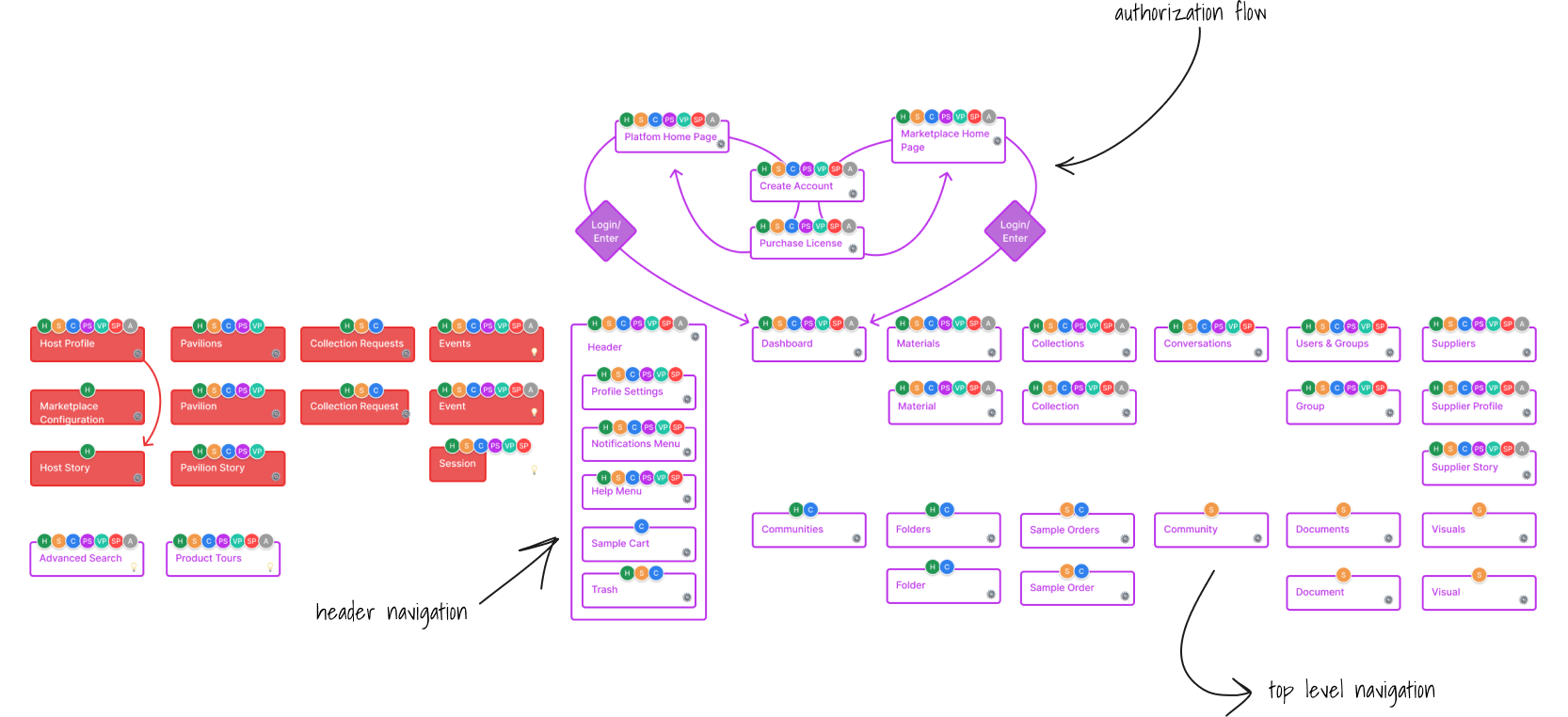
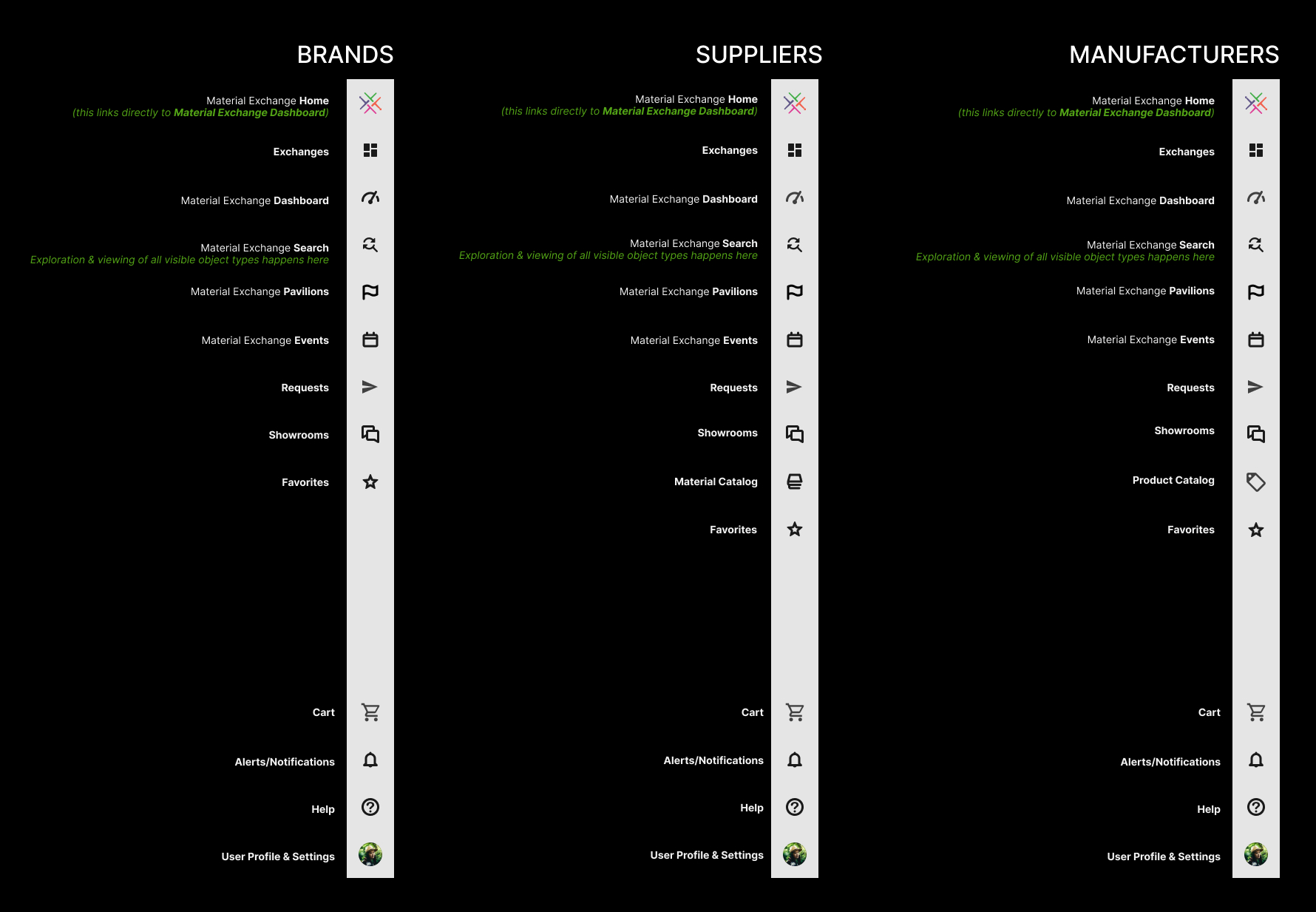
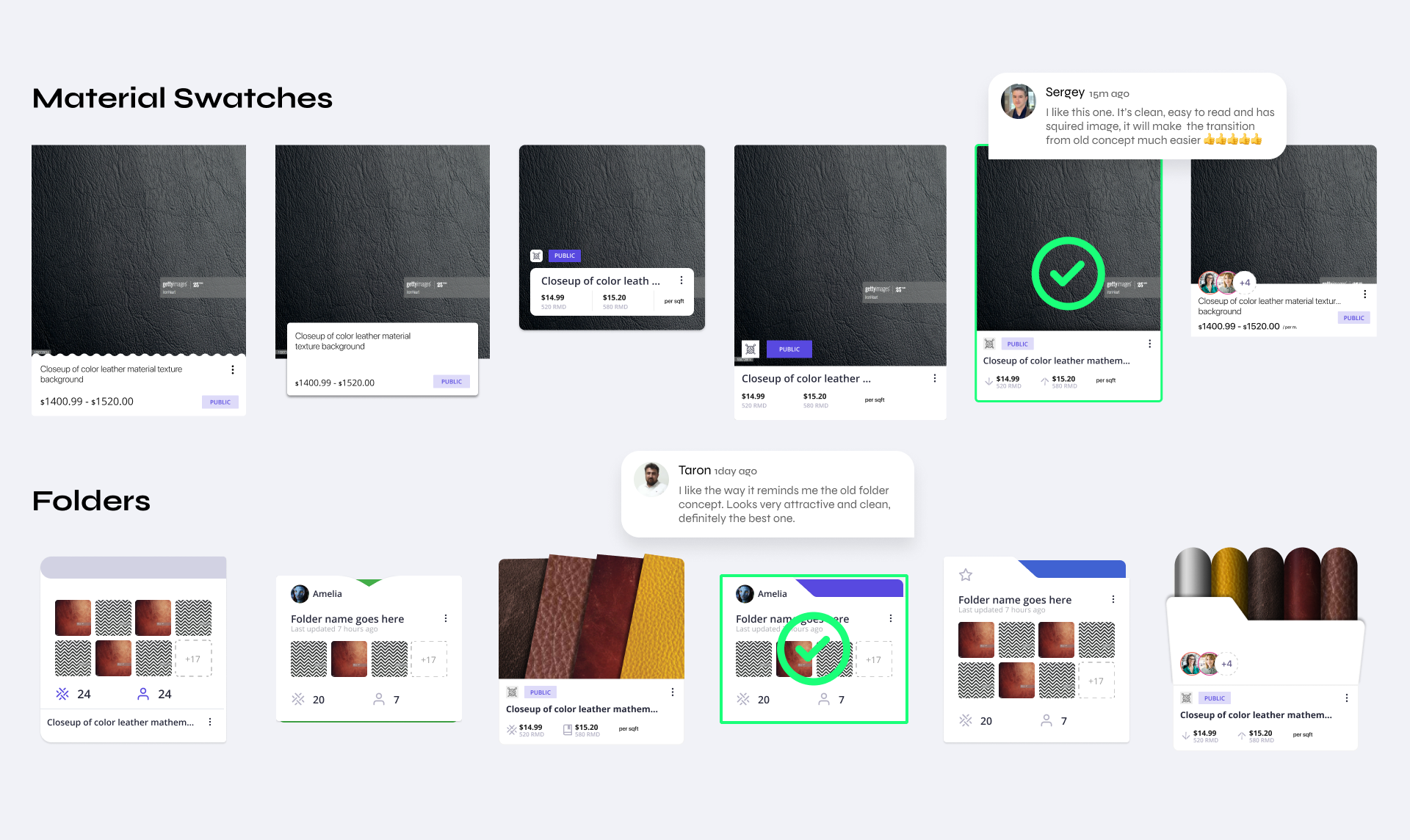
To create the complete Design language of the product, I initially concentrated on designing specific components unique to the product, such are material swatches and folders.
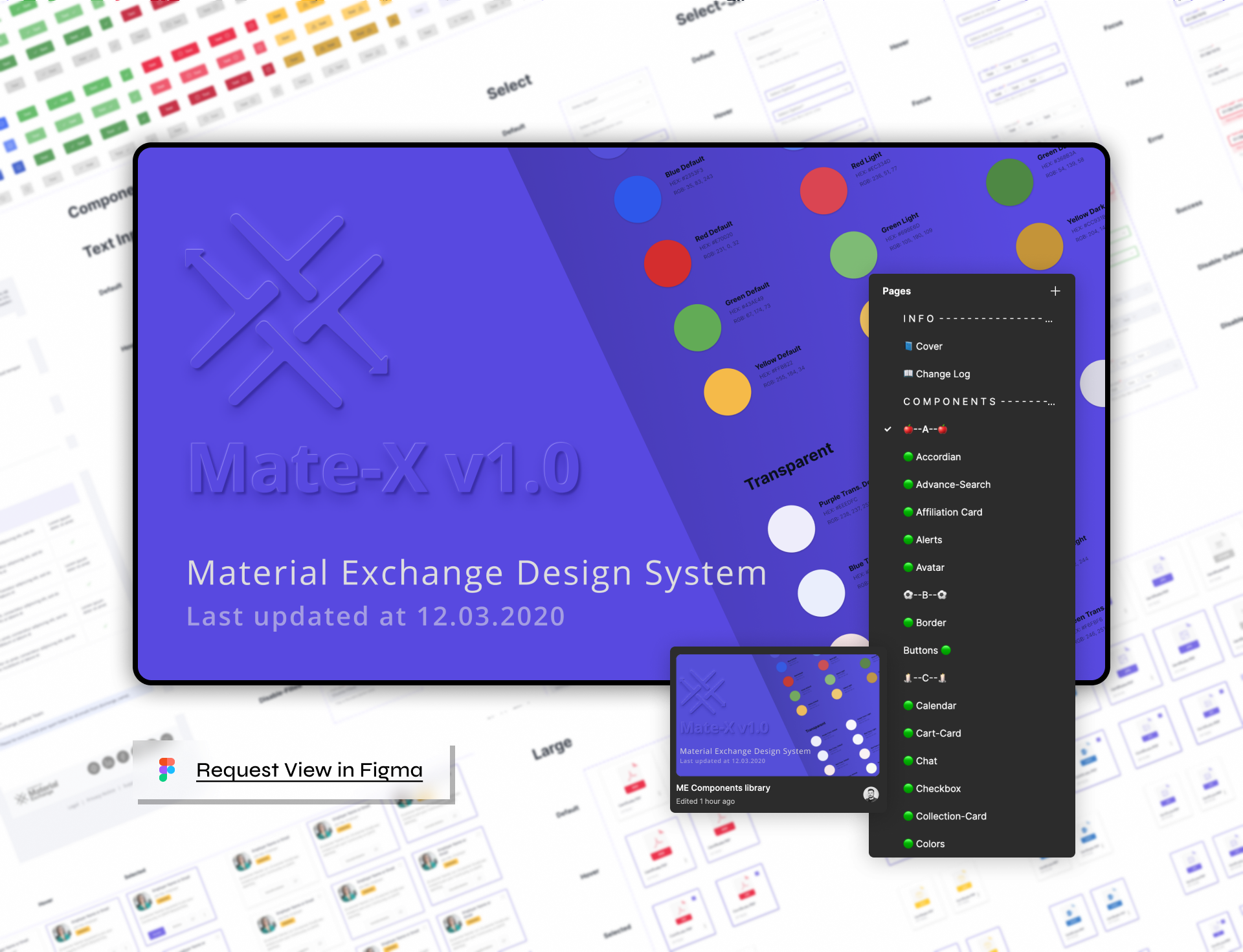
After 2.5 months of dedicated effort, the Mat-EX design system was baked and handed over to the development team.
Ideation Phase
As a design lead, I often took part in ideation sessions. These sessions involved more than just coming up with user-centered solutions; I also facilitated prioritization discussions, design sprints and other related activities.
HMW Statements
- How might I effectively centralize and organize digital materials and assets, providing easy searchability and accessibility for brands, manufacturers, and suppliers within the Material Exchange platform?
- How might I enhance collaboration and communication between teams by integrating feedback and approval processes seamlessly within the Material Exchange platform, ensuring efficient collaboration and minimizing miscommunication?
- How might I assist brands in maintaining consistent and cohesive material usage across different teams and stakeholders, leveraging the Material Exchange platform’s capabilities?
- How might I automate manual tasks and streamline workflows within the Material Exchange platform to significantly improve efficiency, saving valuable time for all users involved?
- How might I ensure robust access controls and permissions within the Material Exchange platform, prioritizing data security and confidentiality to protect sensitive information?
- How might I provide valuable analytics and insights on material usage and performance within the Material Exchange platform, empowering data-driven decision-making for brands, manufacturers, and suppliers?
- How might I guarantee seamless scalability and integration of the Material Exchange platform with other tools and systems used by brands, manufacturers, and suppliers, ensuring smooth operations and compatibility?
Personalized Approach
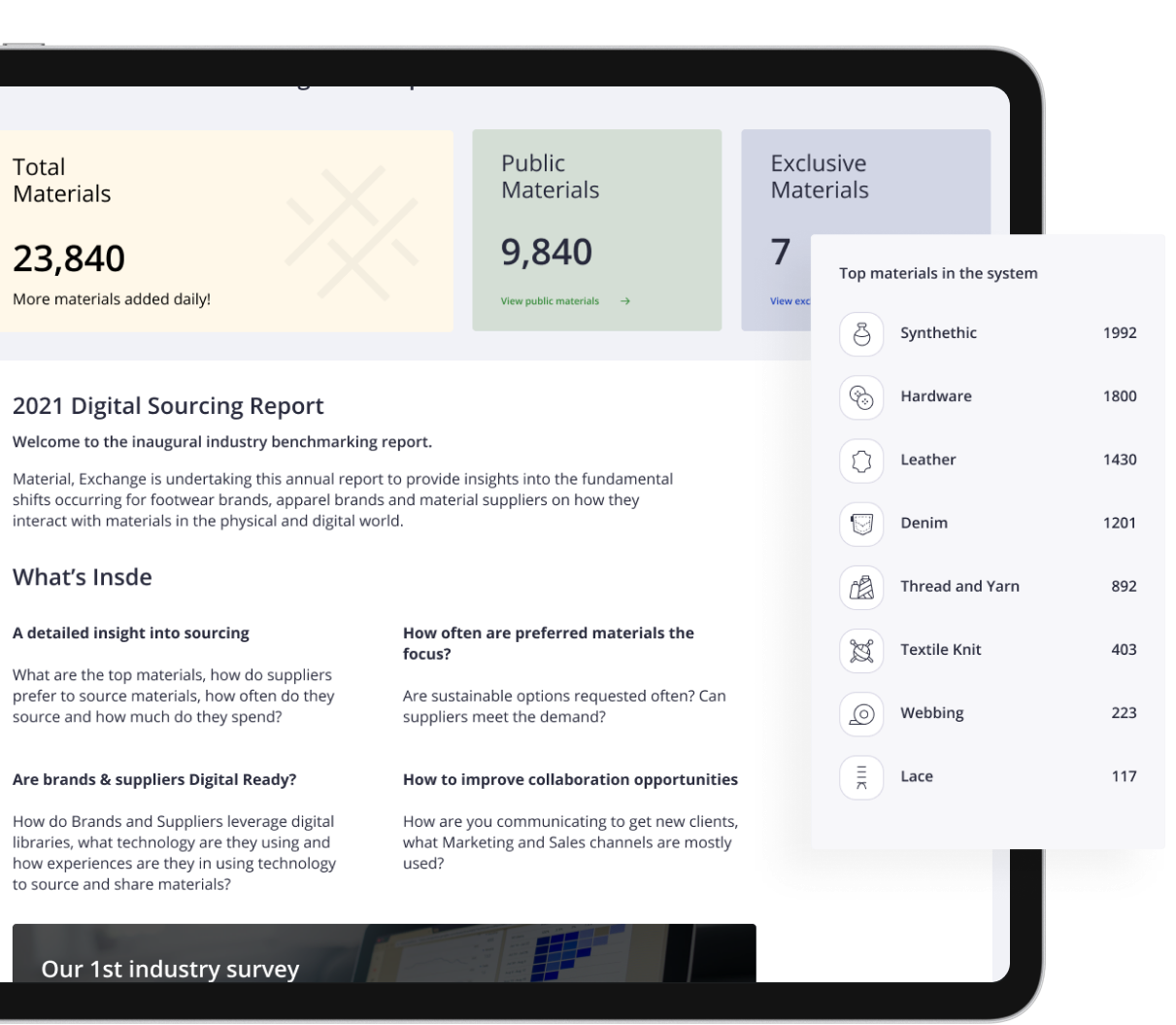
Personalized Dashboard
Centralized interface that offers users an instant overview of their material assets. It provides real-time insights into the status, location, and usage of materials, streamlining inventory management and enhancing decision-making.
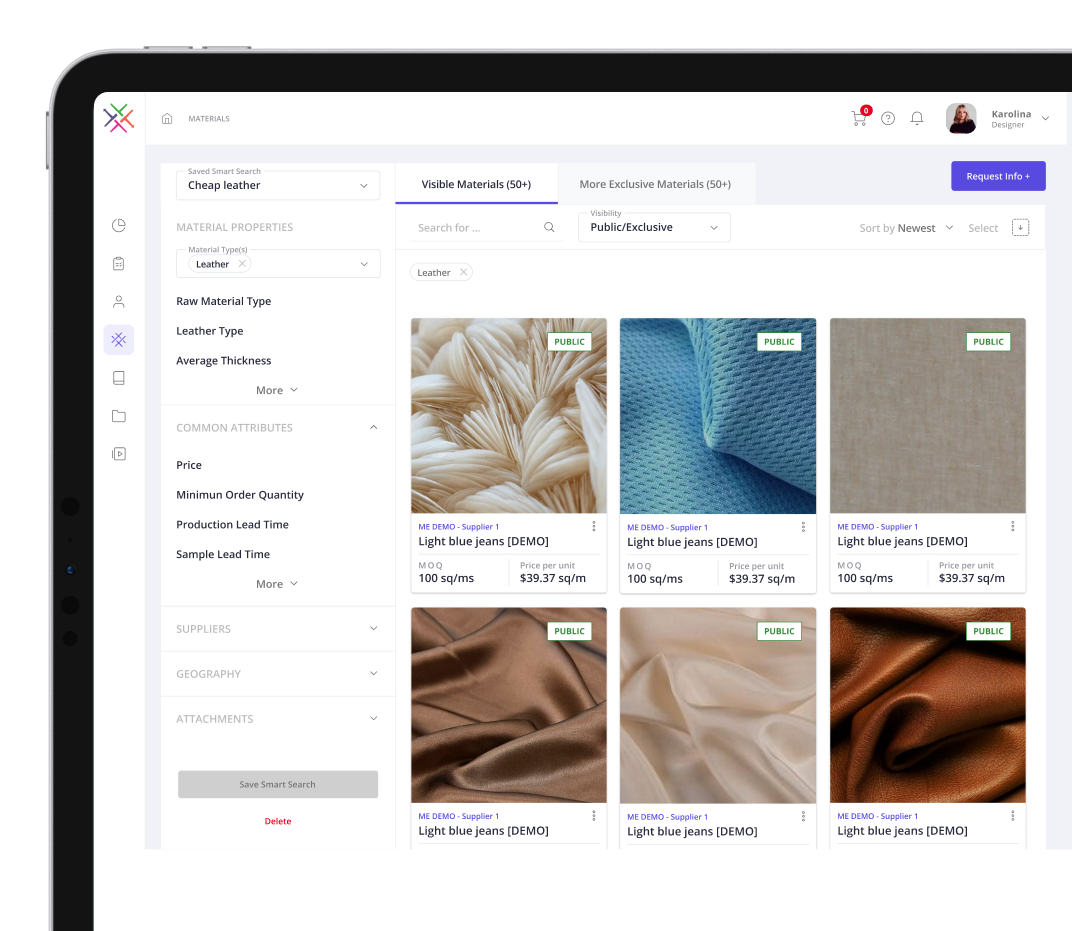
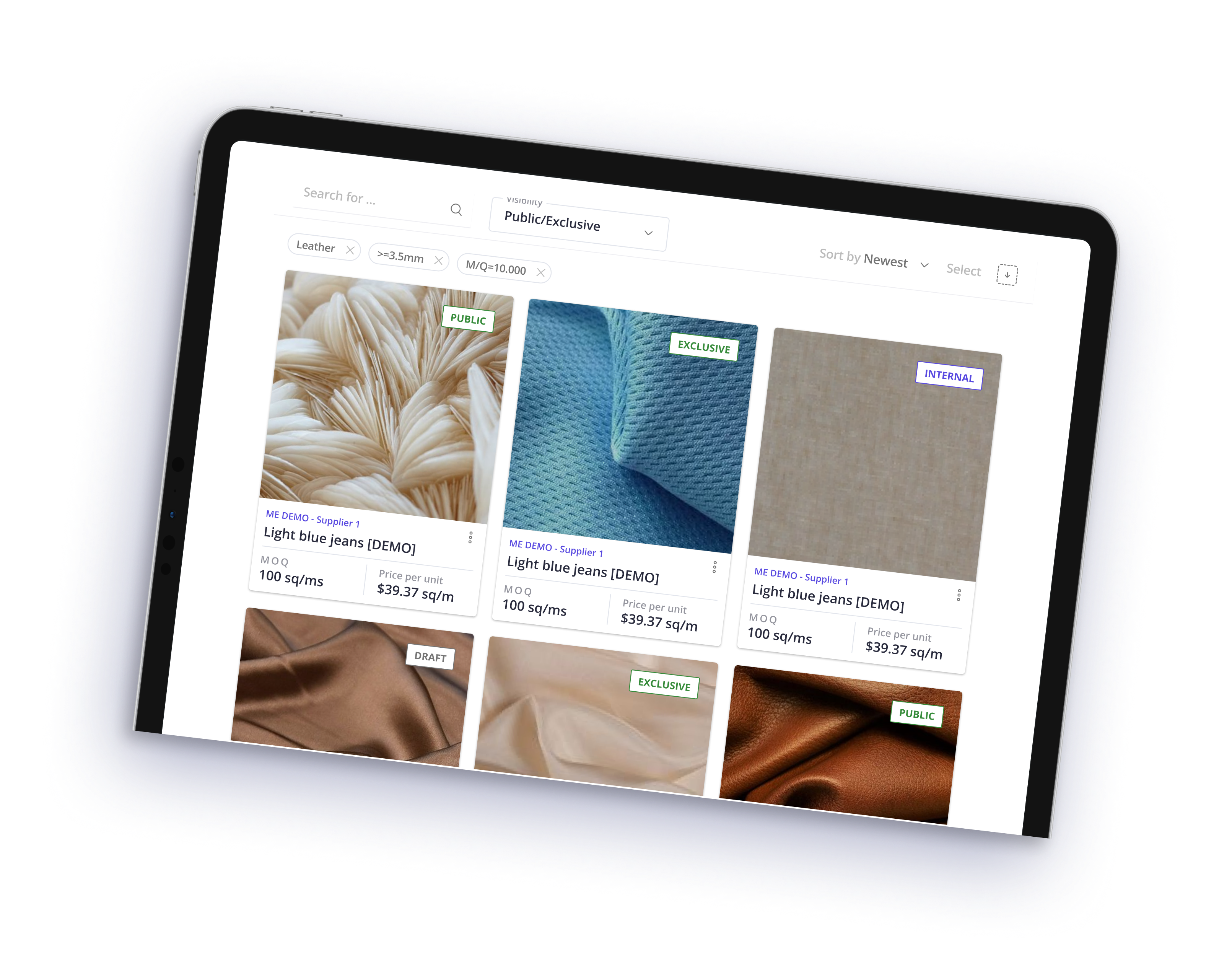
Smart Search
Smart Search empowers users to quickly and intelligently locate specific materials within their inventory. Using advanced search algorithms and filters, it understands user queries and offers real-time suggestions as users type, making the search process highly efficient.
User testing & findings
Hypothesis N 1
Material managers struggle, spending too much time adding materials to folders.
🕒 Exp. Duration — 45 min
❌ Act. Result — 61 min
In a usability test, a material manager was asked to create a winter-fall collection of materials. This involved making folders for different categories and then finding and adding materials to those folders.
Interestingly, a lot of time was spent opening and closing folders repeatedly. The manager also had to add each material individually, which took up a large portion of the session.
Surprisingly, about 60% of the total time was used just for managing folders and adding materials. This left only 40% for more important work such as decision-making and evaluating materials.
The Solution
As a solution, I introduced an innovative feature named “Dropzone”. Drawing inspiration from people's familiarity with operating system folders, Dropzone enables users to effortlessly drag and drop files, mirroring a natural experience.
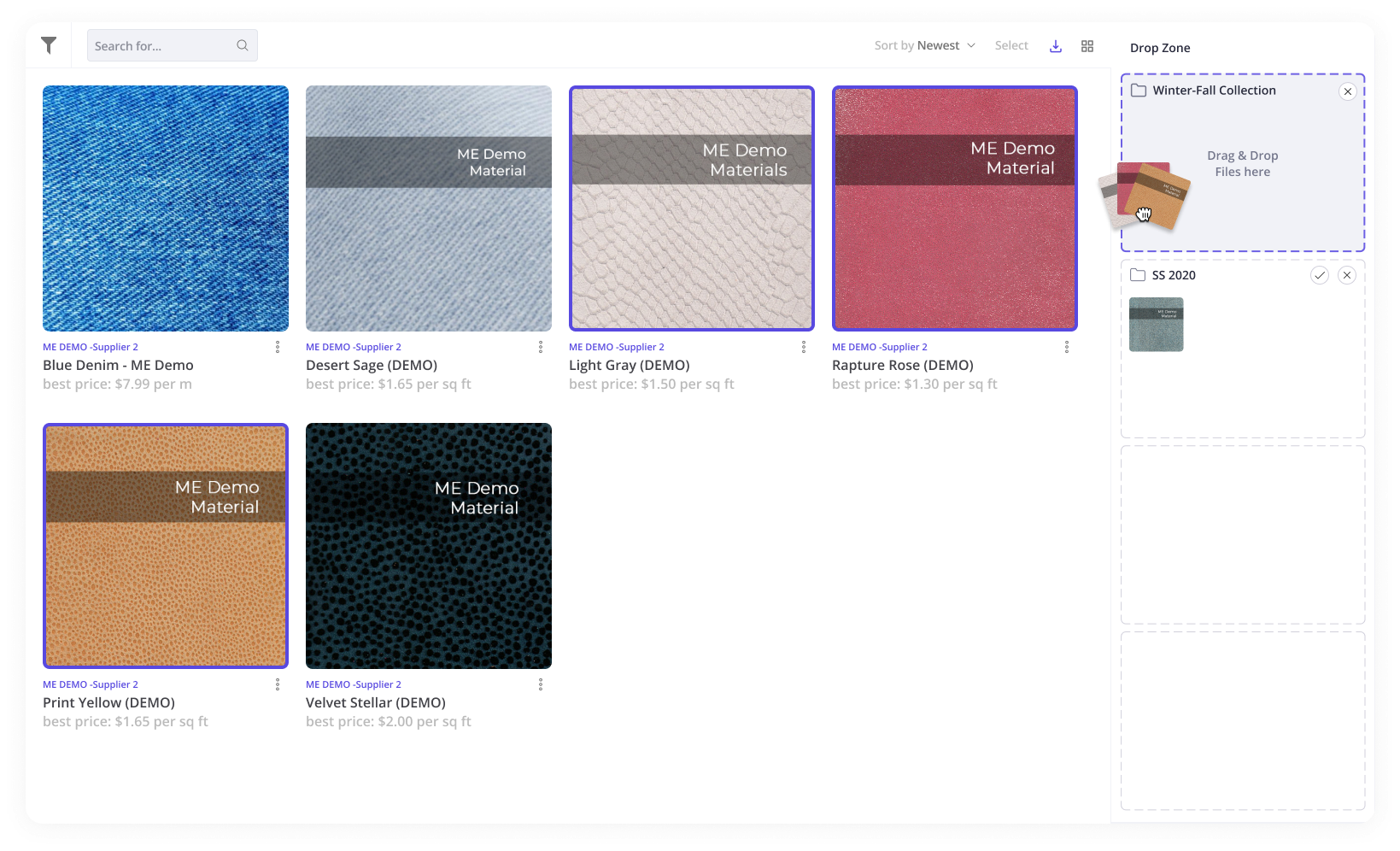
To enhance efficiency, I added the capability to select multiple items and utilize multiple dropzones, streamlining the process of managing up to 4 folders within a single task. This approach not only simplifies the user experience but also significantly accelerates the material management process.
🕒 Exp. Duration — 45 min
🎉 Act. Result — 23 min
Hypothesis N 2
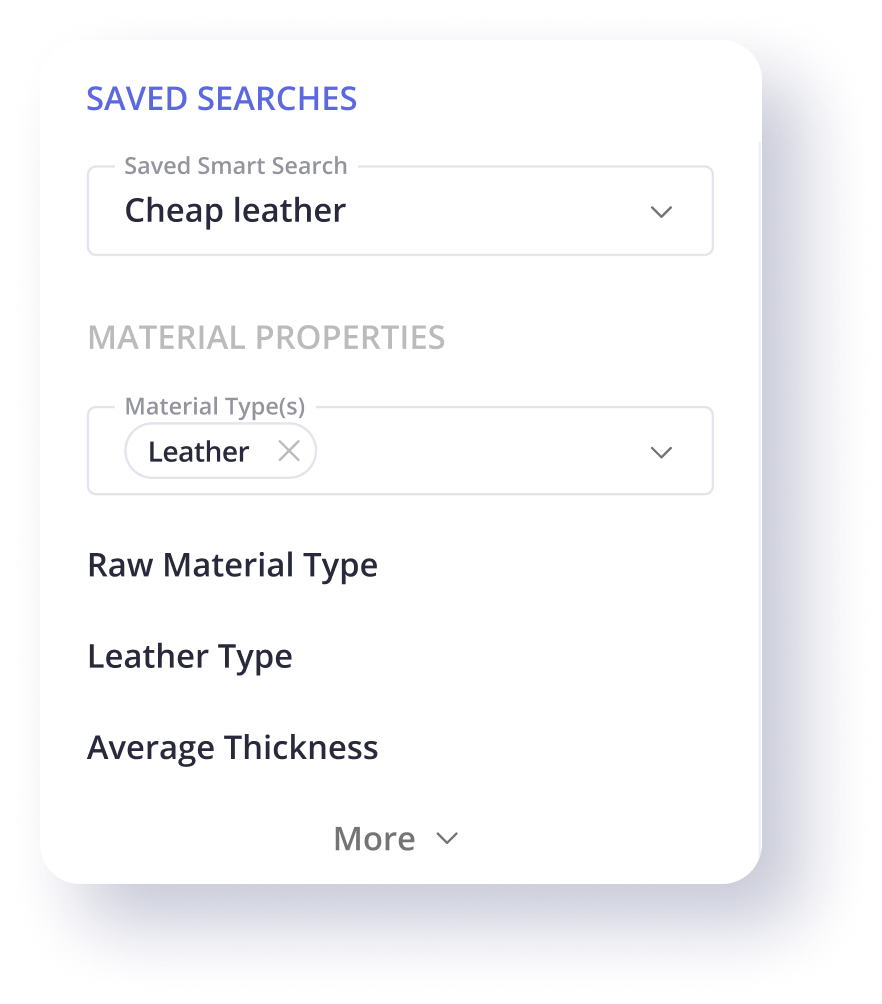
Users frequently conduct similar searches, resulting in repetitive manual entry of search criteria and potential frustration due to redundancy.
The Solution
Easier grouping of search criteria would simplify repetitive operations by enabling users to execute the same search with a single click. To address this need, I introduced and tested the “Save Search” feature.
About Achievements
After working hard for 2 years, here are some things I'm proud of:
- I created the Mat-EX cross-devices design system.
- My design team grew from 1 to 5 talented designers.
- Improved entire company’s design processes.
- Made it easier collaboration between different teams.
- I finished 5 projects.
- And the big news: Material Exchange Raises €25 Million to Lead Sustainable Material Sourcing
Feedback
Davit's commitment has made a meaningful impact on my organization. His keen eye for detail and strong leadership were instrumental during a critical phase when I was struggling to develop my MVP. Thanks to his dedication, I successfully navigated through challenges and reached my goal. A valuable asset to my team.